


Replace a chapter by comparing the replacement with the current accepted manuscript, not merely with the draft it originally came from. Identify corrections made since that draft, carry forward those that still apply, and review the chapter's dependencies before exporting. Keep the integration reversible until the combined manuscript is accepted. A better chapter can still damage the book if it restores mistakes already corrected elsewhere.
Identify the replacement chapter's starting version
Record which manuscript version supplied the chapter being revised and which version is currently authoritative. If an editor worked on an older copy, the replacement may lack later terminology fixes, factual corrections, or changes to the book's structure. Establish that relationship before pasting the chapter into the current document. The replacement's recent modification date does not prove that its underlying content is current.
Keep the original chapter, proposed replacement, and accepted manuscript available for comparison. Use chapter and passage identifiers to locate related material when headings or paragraph order changed. The integration task has two questions: whether the replacement improves its intended problem and whether it preserves relevant decisions made elsewhere since its starting point. Both need evidence before the new chapter becomes part of the release source.
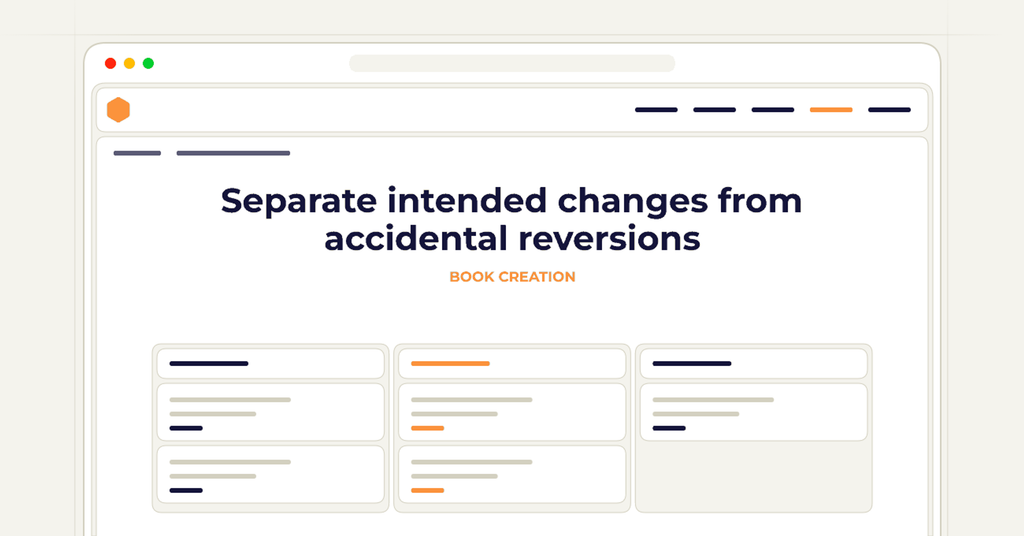
Separate intended changes from accidental reversions
Write a short statement of what the chapter revision was supposed to achieve. It may improve the order of an explanation, replace a weak example, or clarify a prerequisite. Compare the proposed text with that purpose and identify other differences. Some may be useful editorial improvements, but others may simply reflect the older source used for drafting.
For a practical guide to organizing a reading group, suppose the accepted manuscript changed the term facilitator to host and corrected an example involving meeting length. A replacement chapter prepared from an earlier draft may reintroduce both old choices. Mark those reversions independently from the new structural work. This allows the author to accept the improved explanation without losing corrections that remain valid.
Carry forward applicable decisions deliberately
Review each prior correction against the replacement's actual content. Apply it where the underlying issue still exists, rather than blindly repeating edits at old paragraph positions. If the chapter now uses a different example, the earlier numerical correction may no longer apply. Record that distinction so the absence of the old edit is an explained decision rather than an overlooked regression.
Keep terminology and shared facts consistent with the rest of the book. Where the replacement proposes a genuinely better global choice, evaluate that as a separate manuscript-wide decision and identify the affected locations. Do not allow one chapter to silently establish a new vocabulary that neighboring sections have not adopted. Integration should preserve a coherent book while keeping the scope of new decisions visible.
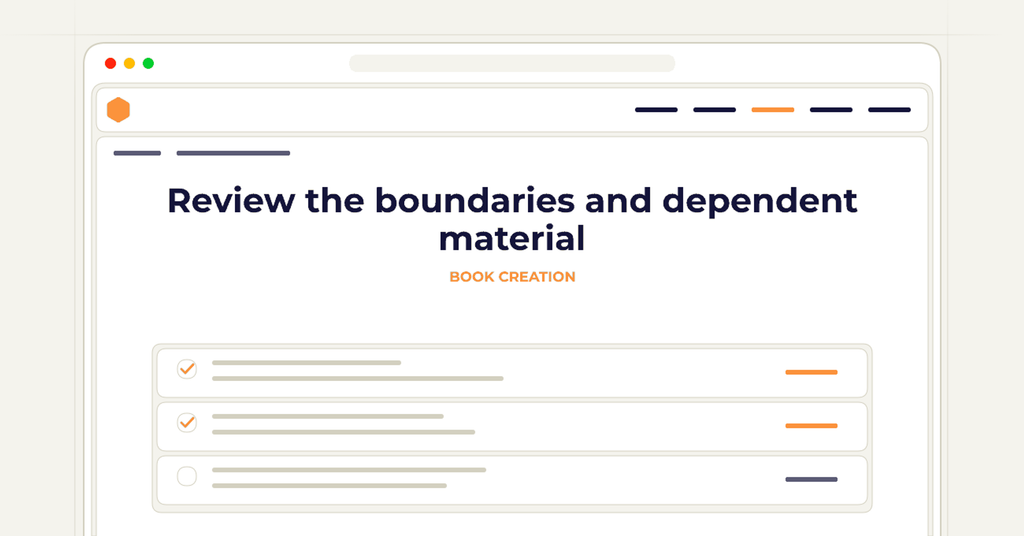
Review the boundaries and dependent material
Read the chapter opening with the end of the preceding chapter, then read its ending with the next chapter. Confirm that the reader has the required context and that promised outputs carry forward correctly. A replacement can be internally clear while assuming a prerequisite the book never supplies. Repair those transitions as part of integration rather than leaving them for a vague final polish.
Check references, figures, exercises, summaries, and the table of contents where the revision affects them. A renamed section can leave a stale reference, and a removed example can make an illustration unnecessary or misleading. Use the project's dependency records where available, then inspect the actual passages. The absence of a broken technical link does not prove that the prose still directs readers to the right explanation.
Accept the integrated source before rebuilding exports
Save the integrated manuscript as a new candidate and compare it with the previous accepted version. Confirm that intended improvements and retained corrections are present, and that unrelated approved work has not been replaced accidentally. Keep the change record focused on meaningful decisions and unresolved issues. Do not promote the candidate solely because the replacement chapter has been inserted successfully.
After acceptance, regenerate affected outputs and inspect the actual export, including locations influenced by changed pagination or references. Preserve the reviewed source and export identifiers together. The earlier package remains useful history, while the new package needs its own evidence. The revision is complete when the improved chapter works within the book and the final files preserve both its new value and the corrections the project had already earned.
Frequently asked questions
Clear answers for this publishing decision.
Can I use the replacement chapter’s date to prove it is current?
No. Identify the source version used to create it and compare it with the current accepted manuscript. A recently edited file can still restore older mistakes.
Should every old correction be copied into the replacement?
Review whether its underlying issue still applies. Preserve relevant decisions, but explain cases where a changed example or structure makes an earlier correction unnecessary.
What should be checked beyond the chapter itself?
Review neighboring transitions, references, illustrations, exercises, summaries, and affected exports. A chapter that works alone may still conflict with the surrounding book.
How wide does the full-wrap cover need to be, and how thick is the spine?
The cover width is back cover plus spine plus front cover plus bleed on both sides; the spine width is the final even page count multiplied by the paper-specific factor Amazon publishes, so the cover cannot be sized before the interior page count is final.
Prepare the cover in a book project