


Track campaign spend and preparation costs separately, then combine them only for the decision that requires a full project total. A platform report describes its own measured activity; it does not automatically include editing, design, or review work undertaken before the test. State which cost basis supports each conclusion.
Define the advertising question first
Write the question the test is meant to answer. An author might want to learn whether a particular audience responds to a clearly described paperback, or whether a revised presentation deserves further investigation. Keep the question narrow enough that the available observations can inform it.
Do not begin with an assumed revenue outcome and work backward to justify the expense. The test may produce inconclusive evidence or show that the presentation needs improvement. A useful plan allows for those outcomes and limits the work required to learn from them.
Record preparation as its own activity
List the work undertaken specifically to make the test possible. This might include reviewing the book description, preparing approved creative material where applicable, organizing a tracking sheet, or paying for a specialist's setup assistance. Record actual invoices separately from estimates and unpaid author time.
Distinguish advertising preparation from improvements the book needed anyway. Correcting an inaccurate description benefits the publication beyond one campaign. You can still record the cost, but identify its broader purpose rather than assigning it automatically to the performance of a single test.
Preserve the campaign's own spend measure
Keep the platform-reported spend visible as a separate value with its reporting period and scope. Do not alter that number by adding unrelated project costs and then label the result as the platform's campaign spend. The distinction makes later comparisons easier to understand.
Use current advertising documentation to interpret the available reports. Keep the recorded observations, the date they were retrieved, and any relevant limitations. A spreadsheet should not make different reporting scopes appear equivalent merely because their values can be placed in adjacent columns.
Calculate different totals for different decisions
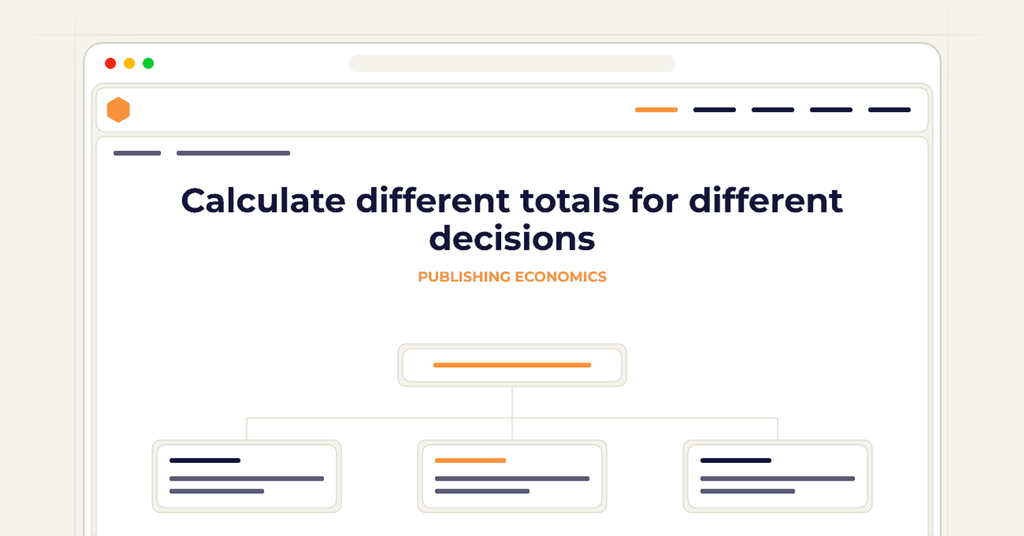
For a full test budget, combine the relevant preparation expense, campaign spend, and evaluation expense while showing each component. For a decision about repeating the same setup, identify which preparation work can actually be reused and which will recur. Those are related but different cost questions.
Use a simple example to make the distinction clear. If preparation costs $120 and campaign delivery costs $80, the initial cash outlay is $200 before any other included expenses. A later test may not repeat the entire $120, but that does not erase the expense from the first test's record.
Include the work of interpreting the result
Budget time to review the data, compare it with the original question, and inspect the publication experience where appropriate. A test that produces numbers nobody can interpret has not completed its learning task. Record who will evaluate the result and what evidence they will use.
Keep conclusions proportional to the observations. A small or short test may not distinguish a weak audience match from an unclear presentation or ordinary variation. Avoid converting uncertainty into a promise that a larger spend will necessarily produce a desired sales outcome.
Save the decision with its cost basis
When deciding whether to stop, revise, or repeat the test, state the cost basis used. A statement about campaign delivery efficiency is different from a statement that the complete preparation project recovered its costs. Readers of the record should be able to tell which claim is being made.
Retain reusable materials and note what must be checked before reuse, including changes to the book, its description, or its intended audience. Compare the next test with the current one using consistent definitions. This preserves the value of the work without hiding earlier expense or assuming that an old setup remains suitable indefinitely.
Frequently asked questions
Clear answers for this publishing decision.
Should author time be included even when no invoice exists?
Record it separately so the effort remains visible. You can distinguish cash outlay from an estimate of total work without pretending that unpaid time was a platform charge.
Can reusable preparation costs be omitted from a repeat-test estimate?
Identify what is genuinely reusable and what needs another review or revision. Explain the assumption rather than treating all previous preparation as permanently free.
Does a low campaign spend prove that the test was inexpensive?
It describes one part of the cost. Preparation, evaluation, and any test-specific services may materially change the total resources used, so review the complete record before making that claim.
What does this book cost to print and produce, and what should the list price be?
Printing cost follows from the trim, ink, and page count, the list price sets the royalty after that cost, and the production budget should be estimated before generation starts, so compare these numbers before you commit to a format or a plan.
See what a book project costs in credits