


Start from the manuscript version both editors received, compare each set of changes separately, and resolve overlaps in a working copy. Keep an explicit decision for each conflict. Read the combined passage in context before accepting it, because two sensible edits can produce an incorrect result when joined.
Establish what each editor actually reviewed
Two returned manuscripts may look like alternatives to the same file while containing different starting text. One editor might have received yesterday’s corrected chapter, and another the earlier full manuscript. Before combining anything, identify the source version for each return. Check the opening and closing passages, chapter order, and a known recent correction. A filename alone is weak evidence when collaborators rename downloaded files.
Keep both returned files intact and create a separate reconciliation copy. If their baselines differ, first list the changes already present in the newer baseline. Otherwise, an older return can appear to request removal of a correction that its editor never saw. Record uncertainty openly. Asking which draft was reviewed is faster than interpreting an unexplained difference as deliberate editorial advice.
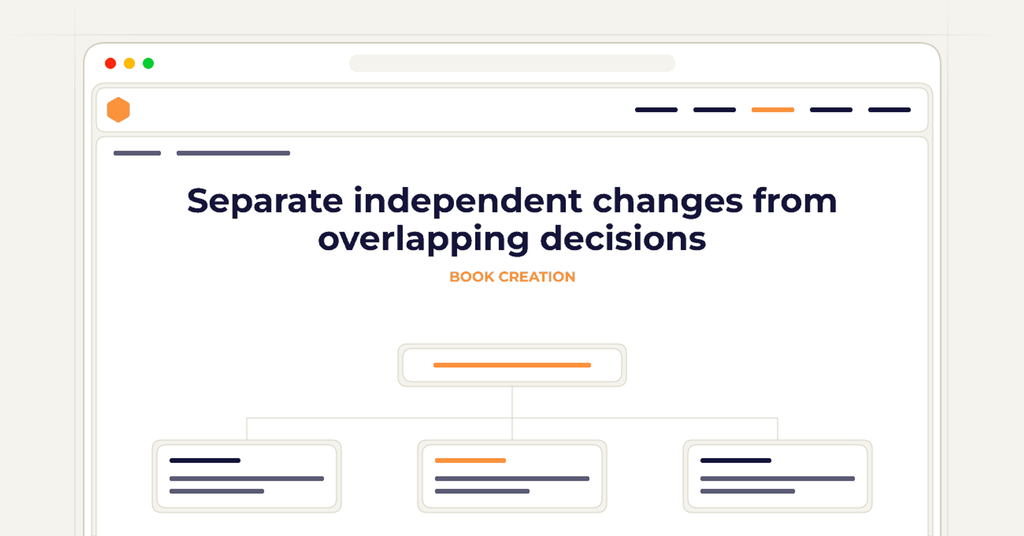
Separate independent changes from overlapping decisions
An independent correction changes a passage that the other editor left alone. An overlap occurs when both touch the same sentence, example, term, or underlying instruction. The overlap can extend beyond adjacent words. Changing a chapter’s definition of a planning unit conflicts with an example several pages later even when a document comparison shows no shared editing location.
Sort changes by the decision they affect. For a practical guide, useful groups include factual accuracy, sequence, terminology, reader tone, and surface corrections. This makes conflicts visible across files. Accepting every spelling correction first may be reasonable, but do not use that cleanup to silently choose between two competing definitions. Those definitions need an author’s decision and a review of the passages that depend on them.
Resolve the meaning before polishing the sentence
Imagine one editor changes “complete the worksheet before planning” to “complete the worksheet while planning.” Another removes the worksheet reference because the exercise was moved to an appendix. Combining the wording mechanically could leave a smooth sentence with no usable instruction. Decide where the exercise belongs, when the reader should use it, and how the text should point to it. Only then write the final sentence.
Keep a short record beside the conflict: the original meaning, each proposed change, the selected outcome, and the reason. A reason such as “the reader needs these totals for the next example” is more useful than “preferred version.” Where the editors disagree about a factual claim, return to the supporting evidence. Editorial seniority or a more confident tone does not establish that a claim is accurate.
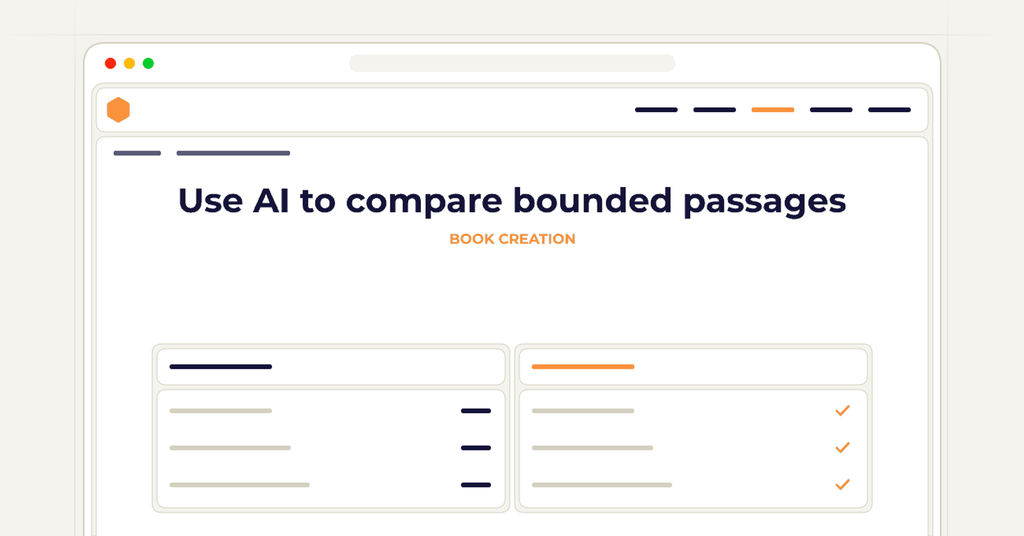
Use AI to compare bounded passages
For a difficult overlap, provide the original passage and both proposed revisions with clear labels. Ask the model to identify changes in meaning, omitted conditions, and contradictions. Give it the surrounding paragraph when that context affects interpretation. Keep the request narrow enough that you can inspect every observation. A whole-book reconciliation can hide an important local reversal inside a broad summary.
Treat any proposed combined paragraph as a new draft. Compare it with the actual decision record and check that it preserves necessary qualifications. If the model invents a transition, example, or explanation, verify that material as well. Keep a record of generated text that enters the book so the final content-origin review reflects the real workflow. KDP’s content guidance distinguishes generated content from AI-assisted editing; confirm the applicable current disclosure treatment before submission.
Prove that the combined chapter still works
Read the reconciled chapter without visible revisions first. Follow the reader’s task from its initial inputs through its expected result. Then review the change history and confirm that every accepted decision appears in the text. These are different checks: a chapter can read smoothly while missing an approved correction, or contain every correction while repeating an instruction in two incompatible places.
Check references, captions, headings, and examples affected by the resolution. If a term changed, search for the previous wording and inspect each occurrence rather than replacing it globally. Export from the reconciled source and review the relevant pages in the intended format. Archive the editor returns with the decision record, and identify the reconciled file as the next working baseline so the same conflict does not return during the next round.
Frequently asked questions
Clear answers for this publishing decision.
Should I accept one editor’s file and paste in the other changes?
That can work when the second set is small and independent, but establish both baselines first. Pasting from an older draft can restore deleted text or remove an accepted correction. Review each imported passage against the reconciliation copy.
Can document comparison resolve editorial conflicts automatically?
Comparison can reveal additions, deletions, and wording differences. It cannot reliably choose the intended teaching sequence or determine which factual claim is supported. Use its output to locate decisions, then resolve those decisions in context.
What should I send back to the editors?
Send the reconciled version and a short list of unresolved questions or decisions that affect their work. Include the relevant passage and your reasoning. This gives the next review a clear baseline without requiring collaborators to reconstruct every intermediate file.
How wide does the full-wrap cover need to be, and how thick is the spine?
The cover width is back cover plus spine plus front cover plus bleed on both sides; the spine width is the final even page count multiplied by the paper-specific factor Amazon publishes, so the cover cannot be sized before the interior page count is final.
Prepare the cover in a book project