


Design alternative reading paths around observable starting knowledge. Identify shared foundations, mark the prerequisites for optional modules, and make every route reach a complete outcome. Test the shortcuts with readers who did not help write the manuscript.
Describe the two readers concretely
Avoid dividing the audience into beginners and experts without explaining the difference. For a guide to recording oral histories, one reader might need help choosing equipment and obtaining a usable recording. Another might already have recordings and need a method for organizing and editing them.
List the tasks each reader can already perform and the tasks each hopes to complete. These descriptions reveal where paths can diverge. A reader who owns equipment is not necessarily familiar with every interviewing concept, so possessions or job titles alone make weak criteria for skipping foundational material.
Find the foundation both routes require
Identify the terms, records, or decisions that later chapters depend on. In the oral-history example, both routes may need a consistent way to identify interview sessions and distinguish original recordings from edited copies. That shared foundation should remain visible to experienced readers.
Keep the foundation focused. Do not force readers through a long introductory chapter merely because one essential definition is buried near its end. Move the common material into a concise section that both paths can reference, then retain the fuller explanation where new readers need it.
Define the entry condition for each module
At the beginning of a module, state what the reader should have available or understand. A chapter about editing an interview might require an identified recording, a backup, and a clear intended use. These are more useful entry conditions than an instruction to skip ahead if the reader feels confident.
Describe a recovery route when the condition is not met. Direct the reader to the exact earlier task that supplies the missing item. A useful shortcut saves unnecessary reading while leaving a clear path back; it should not make readers discover their missing preparation halfway through an exercise.
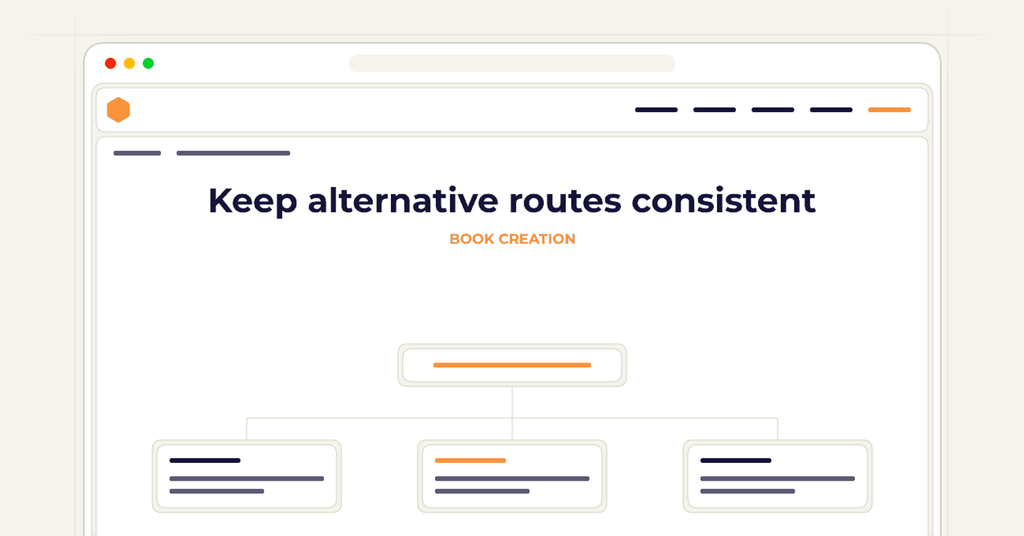
Keep alternative routes consistent
Use one authoritative explanation for any rule or procedure shared by both paths. If a shorter route summarizes the procedure, check that the summary does not omit a condition that changes its meaning. Contradictions often appear when the introductory route is revised but the quick route retains an older instruction.
Maintain a small dependency record beside the manuscript. Record the module, its prerequisites, the output it creates, and the modules that use that output. When an exercise changes from producing a session list to producing a session catalog, this record helps identify every place that still expects the old result.
Make the route visible in the actual format
Explain the paths near the beginning using chapter titles and meaningful destinations. For print, a concise route table can help readers find the relevant sections. For an ebook, inspect navigation in the exported file and make sure destination wording remains understandable without a fixed page number.
Do not rely on a particular color or icon as the only indication of which path to follow. Pair visual cues with explicit labels and short explanations. An attractive overview is useful only if the reader can still determine the next step while using an individual chapter away from that overview.
Test for skipped knowledge and unnecessary repetition
Ask one reader from each intended starting point to complete a representative task. Observe where they stop to search for definitions, repeat work they already performed, or reach an instruction whose input they never created. These failures show whether the route works better than a general question about whether the book feels clear.
Revise the route and its affected modules together. Recheck the table of contents, cross-references, exercises, and exported navigation after moving sections. Preserve the final route map with the editorial records so later revisions can evaluate the reading experience, not merely the order of chapter files.
Frequently asked questions
Clear answers for this publishing decision.
Does a second reading path require duplicate chapters?
Usually the same modules can serve both routes when their entry conditions are clear. Duplicate explanations create maintenance work and increase the chance that one route will contain an outdated version of an instruction.
How can a reader know whether to skip a foundation chapter?
Offer an observable check, such as completing a short setup task or identifying the records needed for the next module. Confidence alone does not show that the reader has the required preparation.
Should both paths end with the same exercise?
They may share a final task if it matches both readers' goals. Check that each route supplies all required inputs and enough practice to complete the task without relying on material the route explicitly skips.
How wide does the full-wrap cover need to be, and how thick is the spine?
The cover width is back cover plus spine plus front cover plus bleed on both sides; the spine width is the final even page count multiplied by the paper-specific factor Amazon publishes, so the cover cannot be sized before the interior page count is final.
Prepare the cover in a book project