


Use automated extraction to find candidate terms, then review whether each term belongs in the glossary and whether its definition matches the book’s usage. Verify factual definitions, remove irrelevant entries, and reconcile related terms. A generated list can accelerate discovery, but the author must decide what readers need and what the definitions can accurately claim.
Define who the glossary is for
A beginner and an experienced reader may need different explanations. State the intended audience and the tasks the glossary should support. Readers might use it to recall a term introduced earlier, distinguish similar concepts, or understand an abbreviation in a table. Those purposes help determine which entries belong and how much detail each requires.
Keep the glossary’s role consistent with the main text. It can support instruction, but it should not hide essential explanations that readers need before they can complete an exercise. Review whether the chapter introduces important concepts adequately. An automatic list of every unusual word may look thorough while failing to solve the reader’s actual difficulty at the point where the word appears.
Treat extracted terms as candidates
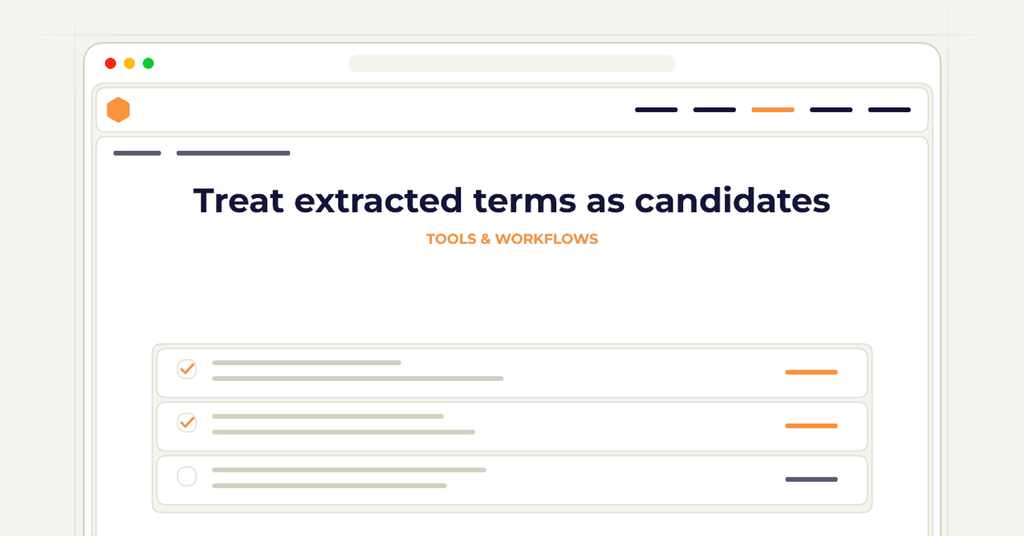
Review the proposed entries against the manuscript. Remove items that are incidental names, ordinary words used in an unusual sentence, or artifacts of source notes and working comments. Combine duplicate forms deliberately, preserving distinctions where they matter. Do not assume that frequency determines importance; a term used once can be essential, while a frequently repeated word may need no definition.
Check for meaningful omissions as well. Automated extraction may overlook a short abbreviation or a familiar word with a specialized meaning in the book. Use chapter objectives, tables, and exercises to identify those candidates. The selection should reflect what readers need to interpret the content, not merely what a tool recognized as vocabulary.
Review definitions against the book’s actual usage
Compare each definition with the passages where the term appears. A general definition may be accurate in another context but wrong for this manuscript. Identify any deliberately narrow usage and explain it clearly. Avoid letting a generated glossary redefine a concept that the chapters use differently, because readers may then encounter two incompatible instructions within the same book.
For example, a workshop guide might use “session” for one scheduled meeting and “activity” for a task within it. A generated definition that treats the words as interchangeable would undermine the planning examples. Repair the definitions and inspect the manuscript for inconsistent usage. The glossary can reveal a problem in the chapters, but its smooth wording should not automatically become the new authority.
Verify claims and related entries
Trace factual definitions to appropriate evidence where the subject requires it. Check that the tool did not invent an expansion for an abbreviation, add an unsupported technical distinction, or import a claim from an unrelated field. Keep uncertain entries in review status until resolved. A short definition can contain a significant factual error despite looking less consequential than a full paragraph of explanation.
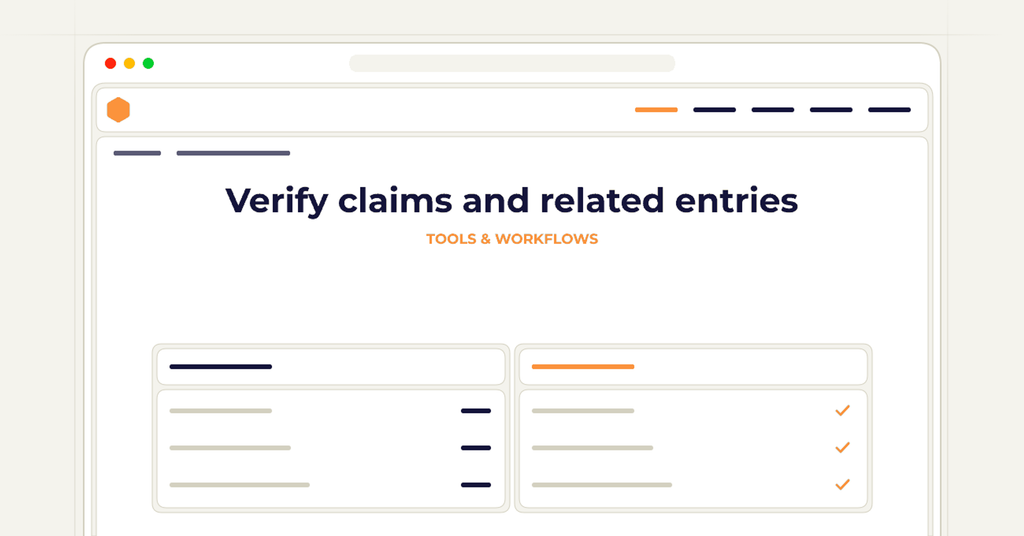
Review related entries together. If one term refers readers to another, confirm that the destination exists and that the relationship is useful. Avoid circular definitions in which each entry depends entirely on the other. Keep terminology and explanatory depth consistent enough that readers can understand the distinction without needing the author to supply missing context.
Reconcile the glossary with the final manuscript
After chapter revisions, revisit entries tied to changed or removed material. Remove obsolete terms unless they still serve a clear purpose, and update definitions that depend on revised concepts. Keep the glossary editable rather than preserving only a flattened publication page. Record significant terminology decisions so later generated drafts do not reintroduce discarded meanings.
Inspect the final export for alphabetical or other intended ordering, readable headings, and working references. Test a few realistic lookup questions with a reviewer. Preserve origin records for generated text retained in the glossary and consult current KDP guidance during publication review. The finished glossary should help readers interpret the actual book, with every entry selected and checked for that purpose rather than accepted merely because it appeared in an automated draft.
Frequently asked questions
Clear answers for this publishing decision.
Should I include every term the tool extracts?
No. Review relevance to the reader’s task and the manuscript’s usage. Remove incidental or redundant entries and add important omissions. Automated extraction is a starting point for selection, not a complete editorial decision.
Can a dictionary definition be used without further review?
Check whether it fits the specialized meaning and scope used in the book, and review any applicable source-use requirements. A broadly correct definition can still confuse readers if the manuscript relies on a narrower distinction.
What if the glossary exposes inconsistent chapter terminology?
Resolve the concept and intended usage first, then update both the glossary and affected passages. Do not correct only one location. Preserve the decision in the working terminology record so future revisions remain aligned.
How do I get from an idea and a brief to an editable manuscript I can finish?
Write the brief first, generate a structure you can edit, then draft and revise the manuscript in reviewable sections so one change never overwrites work you already approved.
Start a book project from a brief