


A keyword suggestion is a candidate to investigate, not evidence that your paperback will rank. Before changing any book files, identify where the tool obtained its data, what period it covers, and whether it measures the same marketplace, format, and reader task as your book. Keep suggestions separate from verified observations.
Write down the claim before testing it
A ranking promise often becomes less convincing when you turn it into a specific statement. "Find profitable keywords" could mean locating phrases that appear on existing listings, estimating search activity, or predicting sales. Those are different tasks. Save the exact claim, the date you saw it, and the output the tool provides. A colored score without a definition does not tell you what the number measures.
For a first paperback about balcony gardening, a tool might recommend "small space gardening" and label the opportunity strong. Record that recommendation as a hypothesis. Your actual question is whether a reader searching that phrase wants a compact, soil-based balcony guide, an indoor hydroponics manual, or a broad garden design book. The score cannot resolve that difference without evidence about the book and the reader.
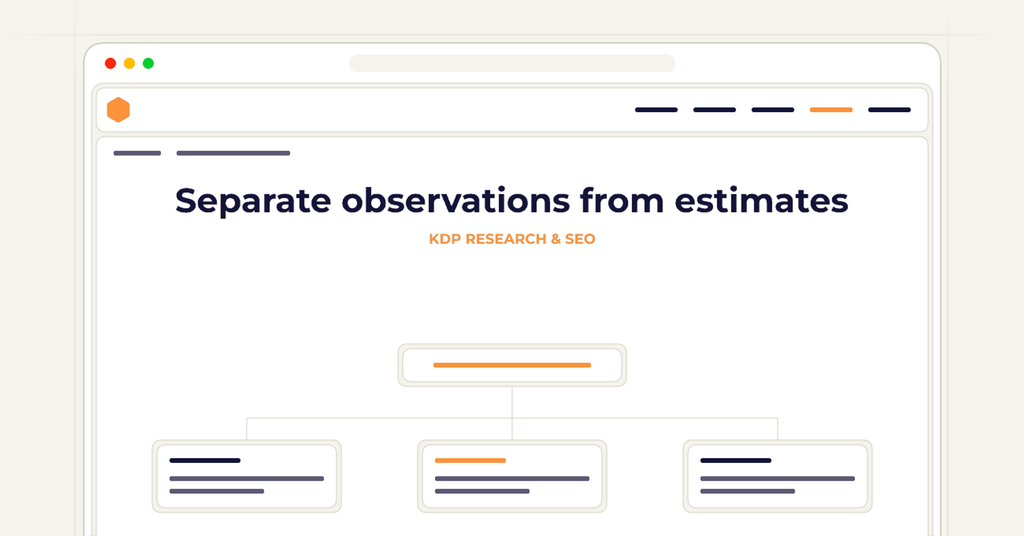
Separate observations from estimates
Build three columns in your research notes: observed, estimated, and unknown. A title visible on a dated product page belongs under observed. Search volume inferred by a provider belongs under estimated, with its method and limitations. Another author's backend keyword settings belong under unknown unless you have legitimate direct evidence. Visible listing wording does not expose those private fields.
Ask whether an estimate combines Kindle and print editions, mixes marketplaces, or relies on a small sample. If the provider does not explain its method, record that limitation rather than inventing one. A useful service may still produce directional suggestions, but you should not turn an unexplained number into a factual sales projection or repeat it as an Amazon measurement in your own planning documents.
Check the manuscript before changing metadata
Read the relevant chapters before accepting a recommended phrase. In the balcony example, a guide with no hydroponic equipment instructions should not promise hydroponic growing merely because that phrase receives a favorable score. Identify the page or section that fulfills each substantial promise in your description. If no passage supports the claim, revise the wording or deliberately expand the book before using it.
Make a dependency list for any proposed title or subtitle change. It may affect the cover, title page, print spine, promotional graphics, and production notes. Draft alternatives in a metadata worksheet first. Compare them against the current KDP metadata guidance before spending design time. This separates an inexpensive research experiment from a file change that creates new proofing work and potential inconsistency across editions.
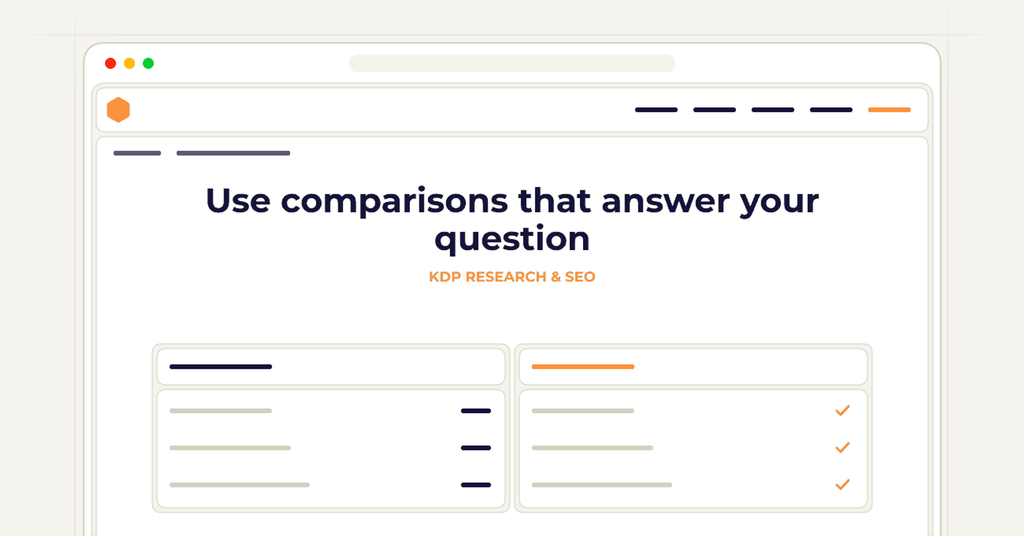
Use comparisons that answer your question
Choose comparable books by audience, task, format, and depth. A gardening encyclopedia and a short balcony checklist may compete for some broad searches while meeting very different needs. Study their samples and descriptions for observable expectations, then write your own notes. Look for omissions your manuscript can address without copying distinctive language, examples, visual layouts, or someone else's framework.
Avoid interpreting one prominent search result as proof that a particular keyword caused its position. Several factors can change at once, and the public page does not isolate their effects. If you revise an editable listing field later, keep a dated record of what changed and what else happened around that time. Treat the result as limited evidence about your own listing, not as a universal ranking rule.
Set a stopping rule for the research
Research is finished when you have a defensible description of the reader, a small set of accurate phrases, and a metadata draft that matches the manuscript. It does not require finding a perfect score. For a first paperback, allocate a defined research session and a later review checkpoint. Repeatedly purchasing reports can delay the higher-value work of improving the actual reading experience and checking print files.
Before accepting a paid recommendation, ask what decision it will change and what information would reverse that decision. If the answer is only that the dashboard looks more confident, keep the money available for editorial or production needs. Save your evidence and source dates with the book project. Reopen the research when the manuscript's audience or scope changes, rather than reacting to every new tool-generated suggestion.
Frequently asked questions
Clear answers for this publishing decision.
Does a high keyword score predict paperback sales?
Not by itself. A score reflects a provider's model and inputs, which may not match your edition, audience, marketplace, or actual reader demand.
Should I put every suggested keyword into my subtitle?
No. Use a clear subtitle that accurately describes the book and review current KDP metadata rules. Keyword suggestions do not justify misleading or repetitive public copy.
Can I test a keyword idea without changing the cover?
Yes. First compare the phrase with manuscript evidence and your reader research. Keep proposed wording in a worksheet until it warrants a coordinated metadata and file revision.
What should the title, subtitle, description, and keywords look like before I upload?
Check the mechanical limits first, then make sure title, subtitle, categories, and description describe the same book for the same reader; a keyword is useful when it matches how that reader searches, not because it is popular.
Draft the listing fields in a book project