


Give each online-dependent exercise an explicit fallback decision. Identify what readers need from the companion resource, then provide enough information in the book for an appropriate offline version or state clearly why the task requires access. Check that the fallback teaches the intended skill and produces an answer readers can evaluate.
Identify the exact dependency in the exercise
Start with a particular task, such as sorting a small practice dataset supplied through a companion page. List what the reader obtains online: the records, a software tool, a demonstration, or a submitted result. These dependencies have different consequences. Missing data can sometimes be replaced with a printed extract, while a task about operating a specific online interface may not have an equivalent offline procedure.
Describe the learning outcome before choosing a substitute. If the task teaches category selection, readers might work with a small printed table. If it teaches importing a file into a named application, manually copying a table changes the skill being practiced. A fallback should disclose that change rather than claiming to reproduce the original exercise exactly.
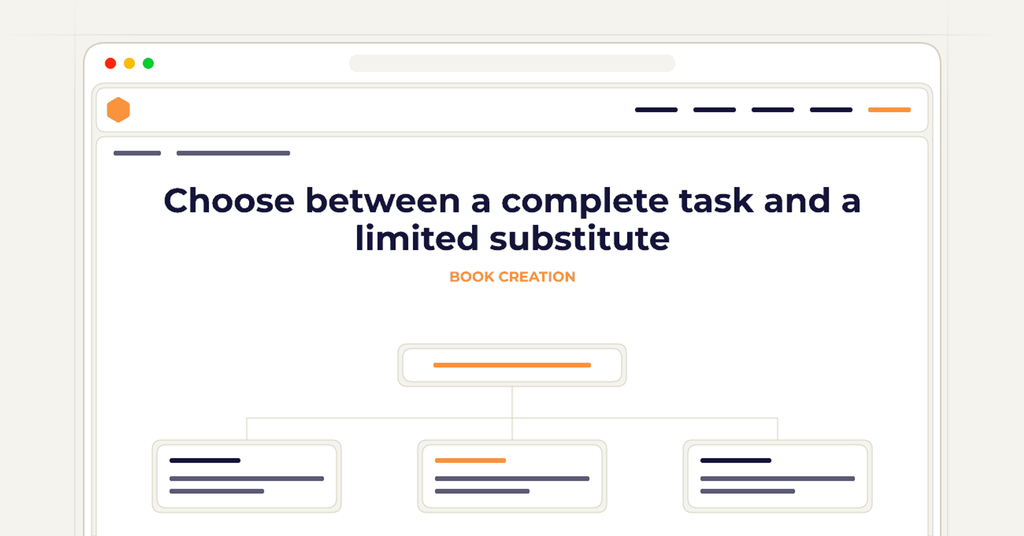
Choose between a complete task and a limited substitute
For each dependency, decide whether the book will contain a complete offline exercise, a reduced practice version, or a clear access requirement. Base that decision on the reader's intended use and the space available. A reader using a printed book away from a connection needs to know before starting whether the next task can be completed there.
Keep the choice local to the relevant exercise. A general sentence in the introduction about companion resources may be forgotten by chapter twelve. Put the access requirement or fallback direction beside the task, using language that identifies what the reader can accomplish. Avoid making an incomplete substitute sound like a complete alternative simply because it includes the first few steps.
Include enough source material to complete the fallback
For a printed dataset exercise, include every record needed for the stated question and define the fields that readers must interpret. If the original downloadable file contains hundreds of rows, select a purposeful small case and write a question suited to it. Do not ask readers to calculate a whole-file total from a partial extract that cannot support that result.
Check practical legibility and copying effort in the intended edition. A compact table may be adequate for comparing three categories but frustrating for entering long identifiers. If exact entry is unnecessary, redesign the task around reasoning on the supplied values. Keep the fictional or sourced status of the material clear, and retain the origin records needed for the data actually included in the book.
Write separate instructions where the procedures diverge
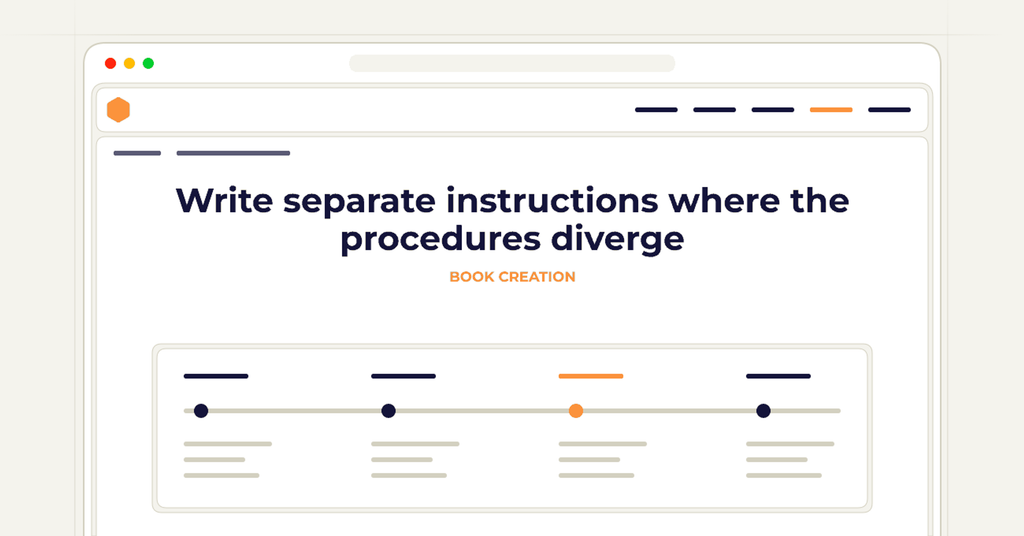
State the starting point for the offline version. Identify which tools or ordinary materials it needs, how the reader should record work, and which steps of the original procedure no longer apply. Do not leave instructions such as click the submit button in a task that has become a paper exercise. A brief independent sequence is often clearer than a long chain of exceptions to the online directions.
Preserve the important decisions rather than copying every interaction. In a categorization lesson, the learner may still need to distinguish ambiguous entries and explain a choice. In an interface lesson, a static illustration may support observation but cannot provide live interaction. Name that limitation so the reader knows which part of the skill remains unpracticed.
Provide a way to evaluate the offline result
Create an answer or review guide for the fallback's actual inputs. A solution calculated from the complete companion dataset may be wrong for the printed subset. Check intermediate decisions as well as the final result when they matter to the lesson. Explain acceptable alternatives where the task involves judgment, instead of inventing one exact answer for an open-ended exercise.
Ask someone to try the offline path using only the materials it explicitly names. Record where they need information that the book does not provide. Fix the missing input, ambiguous direction, or unsupported answer before approving the exercise. This small trial checks whether the stated path is usable; it does not establish that every reader or every edition will have the same experience.
Maintain the two versions as connected teaching assets
Assign the online task and its fallback stable identifiers in the editorial record. When data, instructions, or learning outcomes change, review the connection between them. The versions do not need to be identical, but they should still teach the relationship the chapter describes. Record deliberate differences so a future editor does not erase them while trying to synchronize the files.
Before release, follow the printed directions from start to finish and test the online resource separately. Confirm that the book's description accurately states any required access and that the fallback is present in the edition being described. Preserve the checked exercise inputs, solution, and resource version together. A future resource outage then has a known reader consequence rather than an improvised response after publication.
Frequently asked questions
Clear answers for this publishing decision.
Does every companion exercise need an offline version?
No. Make the dependency explicit and choose a complete fallback, a limited substitute, or a stated access requirement according to the actual learning outcome.
Can a few printed rows replace a large downloadable dataset?
They can support a deliberately smaller task. Rewrite the question and expected answer for that subset rather than implying that it produces the complete dataset’s results.
Is a screenshot an offline substitute for using an application?
It can support observation or discussion, but it does not reproduce live interaction. Explain which skill the reader can practice and which still requires the application.
What must be rechecked after the online exercise changes?
Review shared inputs, learning outcomes, directions, and answers. Preserve intentional differences while correcting any mismatch that makes the printed fallback misleading or unusable.
How wide does the full-wrap cover need to be, and how thick is the spine?
The cover width is back cover plus spine plus front cover plus bleed on both sides; the spine width is the final even page count multiplied by the paper-specific factor Amazon publishes, so the cover cannot be sized before the interior page count is final.
Prepare the cover in a book project