


Before submitting a book, compare the release folder with the files and metadata that actually received approval. Identify each selected artifact, verify its relationship to the accepted source, and inspect the critical corrected locations. A tidy folder and convincing filenames are not enough. The final selection needs evidence that the reviewed interior, cover, and descriptive details belong together.
Define what belongs in the release set
List the artifacts required for the intended edition and the purpose of each. Distinguish the interior upload candidate, cover upload candidate, metadata record, editable sources, and supporting review evidence. These may all belong to the project without all being files to upload. Clear roles reduce the chance that a preview image or a working document is mistaken for the final production output.
Record the edition and relevant specifications with the set. If the project contains both ebook and print work, identify their packages separately. A cover approved for one format does not establish that a similarly named file is suitable for another. The inventory should make the intended pairing clear before the reviewer starts opening documents or relying on assumptions carried over from earlier handoffs.
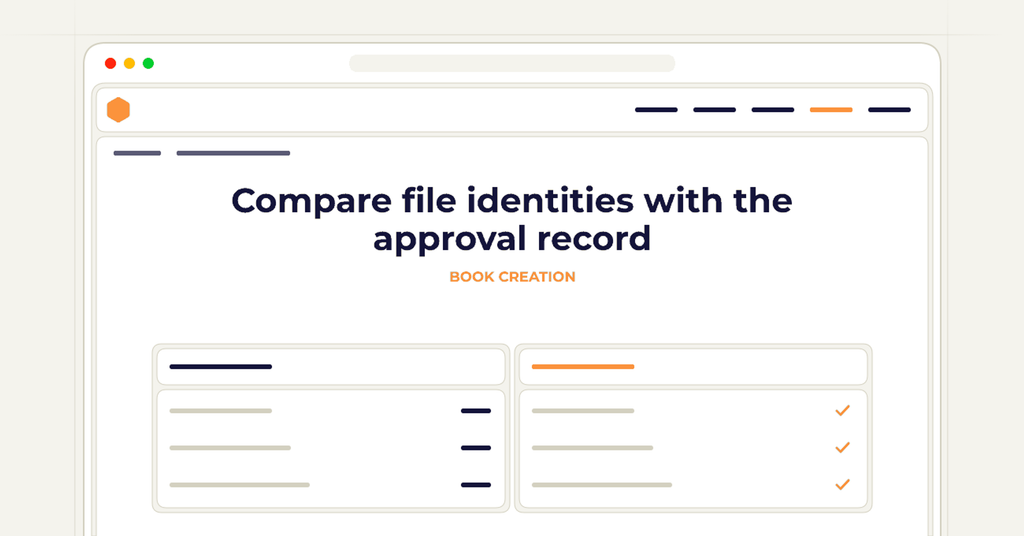
Compare file identities with the approval record
Match each candidate to the identifier recorded during review. Use reliable version information and file hashes where the workflow provides them, while recognizing that hashes establish identity rather than quality. If the approval record refers only to a vague filename, inspect the actual content and reconstruct the relationship before treating it as confirmed. Do not assume the newest timestamp identifies the approved version.
Look for duplicate exports with similar names and determine which one is intended. An old file labeled final can survive beside a later corrected version, while an automatically generated filename may contain the accepted output. Resolve the ambiguity explicitly and keep superseded candidates distinguishable. The author should not need to make a memory-based choice among nearly identical files at the moment of submission.
Inspect the corrections that mattered most
Open the selected interior and cover and revisit known late corrections. If the manuscript fixed an example or replaced a diagram, confirm the selected export includes that change. If the cover subtitle was corrected, inspect the actual cover file rather than the design source alone. These checks provide practical evidence that the release set contains the version the team intended to deliver.
Include changes that affected relationships between files. A revised interior may have altered production inputs used for the cover, and a changed title may have required metadata updates. Inspect the accepted dependencies, not only the visible page where the first issue appeared. A package can contain individually valid files that do not belong to the same release baseline.
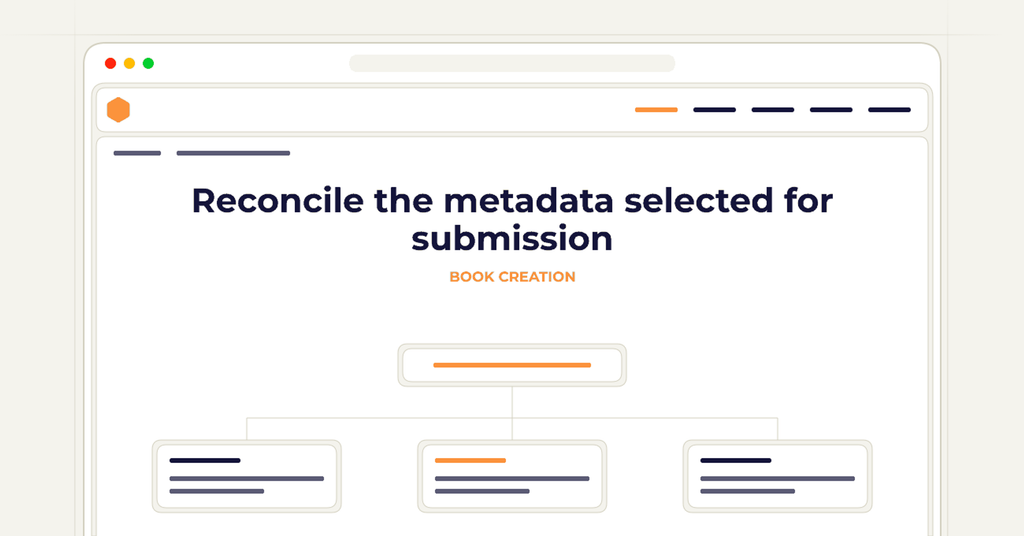
Reconcile the metadata selected for submission
Compare the submission-ready fields with the accepted book identity and content. Check the title, author details, description, and other relevant values against the actual package. A metadata draft prepared before the final manuscript correction may retain an unsupported promise or an earlier subtitle. Identify the selected record clearly so a historical alternative is not copied into the publishing workflow accidentally.
Verify current KDP requirements and available editing options for the intended edition where needed. Keep the factual review of the copy separate from the mechanics of applying it. Record unresolved differences rather than choosing whichever value is easiest to enter. The release selection should represent one coherent book, with descriptions and files that agree about what the reader receives.
Freeze the accepted selection without losing its sources
Once the comparison is complete, record the accepted artifact identities and review date as the release baseline. Keep editable sources and historical versions available in their appropriate locations. Freezing a selection means making the intended package unambiguous; it does not require destroying the material needed for future revisions or investigation.
If another change occurs before submission, identify which selected artifacts and checks it affects and update the baseline deliberately. Do not quietly replace a file while leaving its earlier approval record attached. After the actual submission, preserve the record of what was selected and the resulting state separately. This closes the gap between careful editorial review and the practical file choices that determine which book package enters the publishing process.
Frequently asked questions
Clear answers for this publishing decision.
Does the newest file automatically belong in the release folder?
No. Match the file to the approval record and inspect relevant content. A newer timestamp can identify an unreviewed experiment rather than the accepted output.
What do file hashes prove in this process?
They help establish that a file is the same artifact previously identified. They do not establish editorial quality, correct specifications, or compatibility with the other selected files.
Should historical sources be deleted after freezing the package?
Preserve useful sources and history separately. The goal is an unambiguous release selection, with enough evidence to support later revisions and investigation.
How wide does the full-wrap cover need to be, and how thick is the spine?
The cover width is back cover plus spine plus front cover plus bleed on both sides; the spine width is the final even page count multiplied by the paper-specific factor Amazon publishes, so the cover cannot be sized before the interior page count is final.
Prepare the cover in a book project