


Build a chronology as an editable set of event records before turning it into chapters. Distinguish confirmed dates from estimates, connect each event to its evidence, and keep narrative placement separate from chronological order. This allows the story to change without silently changing the historical record.
Define the place and period the book covers
Begin with a clear geographic and temporal boundary. A history of one neighborhood over fifty years requires different evidence and chapter choices from a history of a town's founding. Record related subjects that are outside the main scope so interesting discoveries do not continually expand the manuscript without a decision.
Explain why the chosen period matters to the reader. The boundary might follow a major physical change, a community institution, or a sequence of developments that can be documented. Avoid choosing dates only because they produce a tidy title if the available material does not support a coherent account within them.
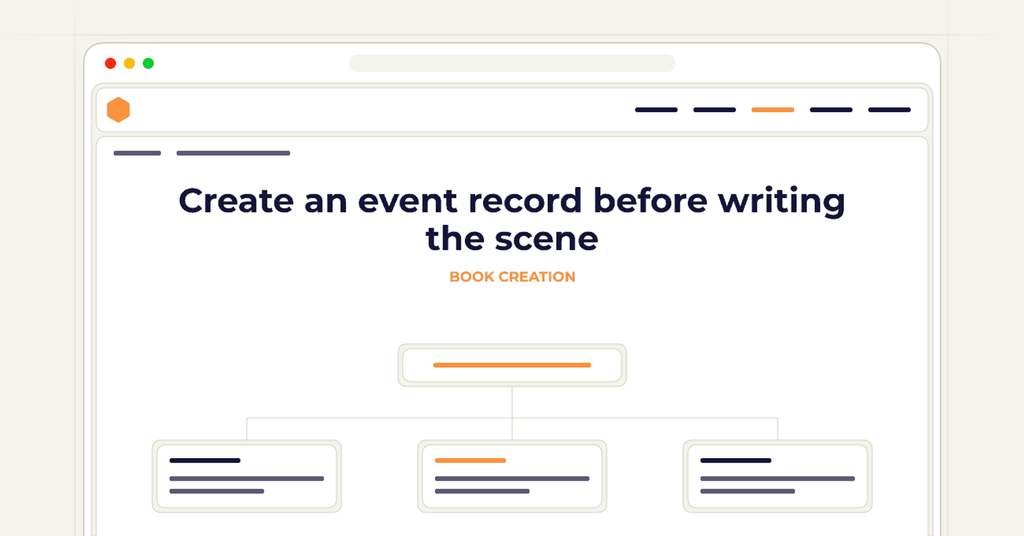
Create an event record before writing the scene
Give each event a stable identifier and record the date or date range, location, people involved, and a concise factual description. Keep the source references beside the record. This separates the event from the prose that may later describe it in several different ways.
Do not fill gaps with plausible detail merely to make a scene easier to draft. If the record establishes that a meeting occurred but not what everyone said, preserve that limit. Narrative fluency should not turn an undocumented conversation into an apparent historical fact.
Represent uncertain dates honestly
Distinguish exact dates from approximate periods and unresolved alternatives. A photograph may be dated to a decade, while a newspaper item provides a particular day. Record those levels of certainty rather than forcing every entry into the same precise date field.
When sources disagree, preserve the competing information and the reason for any editorial conclusion. A working chronology can contain an unresolved question without assigning it a false answer. This makes later corrections easier and helps the manuscript use appropriately qualified language where the evidence remains limited.
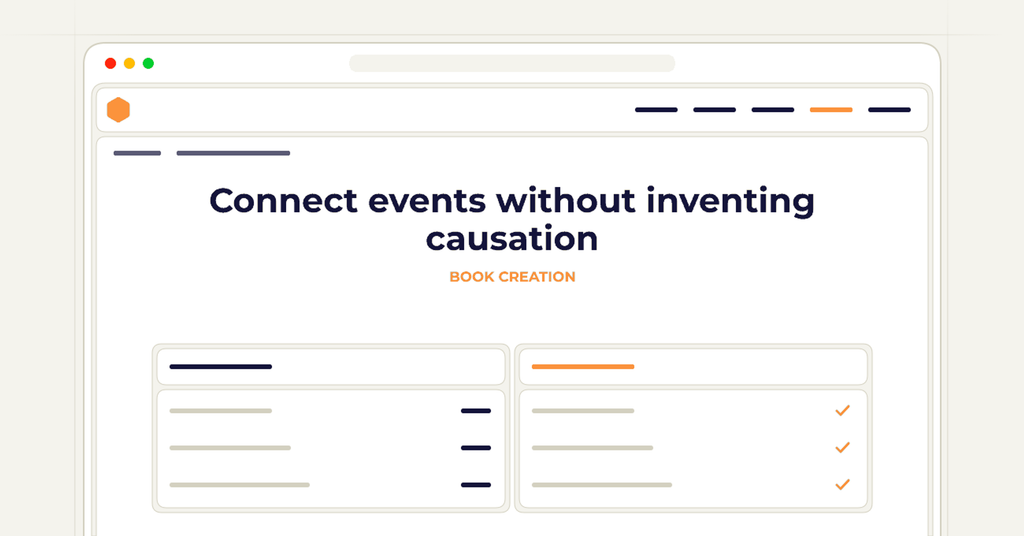
Connect events without inventing causation
Chronological sequence shows that one event preceded another; it does not by itself establish that the first caused the second. Record the evidence for causal claims separately from the dates. A business opening after a new road was built may invite investigation, but the timing alone does not explain the business decision.
Use the chronology to identify questions for research. Look for missing intervals, conflicting accounts, and events whose relationship needs clarification. The record should guide inquiry rather than encourage the author to connect every adjacent entry with a confident explanatory sentence.
Keep chapter placement as a separate decision
The manuscript may organize events by theme rather than strict date order. A chapter on schools may revisit a period already discussed in a chapter on transport. Record each event's narrative placement separately so moving a passage does not alter its date or disconnect it from supporting evidence.
Use clear transitions when the narrative changes period. Check that a reader can distinguish a return to an earlier event from the next step in a sequence. An editable chronology helps verify these transitions while allowing the author to choose a structure that serves the story.
Review captions and summaries against the same records
Connect photographs, maps, timelines, and chapter summaries to the event records they describe. A caption may accidentally state an exact date where the research supports only an approximate period. A compressed timeline may also remove a qualification that remains visible in the main prose.
Before export, compare the retained dates and claims across these forms. Preserve the chronology, evidence references, and unresolved research notes with the manuscript. Later revisions can then update a record and its dependent passages deliberately rather than searching for every place an uncertain date was copied.
Frequently asked questions
Clear answers for this publishing decision.
Should every chronology entry become a paragraph in the book?
No. The working chronology supports research and consistency. Select events for the manuscript according to the book's scope and reader needs, while retaining useful background records separately.
Can AI fill missing details in a historical scene?
It may suggest research questions or draft clearly labeled hypothetical material, but invented details should not be presented as documented events. Verify retained factual claims against the available evidence.
How should I handle two sources that give different dates?
Preserve both references, investigate the discrepancy, and record the basis for any conclusion. If the issue remains unresolved, use wording that reflects the uncertainty rather than silently choosing the tidier date.
How wide does the full-wrap cover need to be, and how thick is the spine?
The cover width is back cover plus spine plus front cover plus bleed on both sides; the spine width is the final even page count multiplied by the paper-specific factor Amazon publishes, so the cover cannot be sized before the interior page count is final.
Prepare the cover in a book project