


Before exporting a story, compare its scene chronology with every explicit date, duration, and relative-time reference. Track event order separately from presentation order, and preserve intentional uncertainty. Correct contradictions in the manuscript and related materials without forcing a nonlinear story into chronological narration.
Build the event timeline separately from chapter order
List the important events in the order they occur within the story world. Keep the chapter or scene where each event is presented as a separate field. A flashback can appear late in the book while describing an early event, so one list should not be expected to represent both chronology and reading order.
For example, a character may recall a missed train halfway through the novel even though it happened before the opening scene. The timeline should place the missed train at its actual point in the story while identifying where the reader learns about it. This distinction prevents an editor from treating a deliberate narrative reveal as a date error or from overlooking a genuine contradiction hidden by the presentation order.
Collect explicit and relative time references
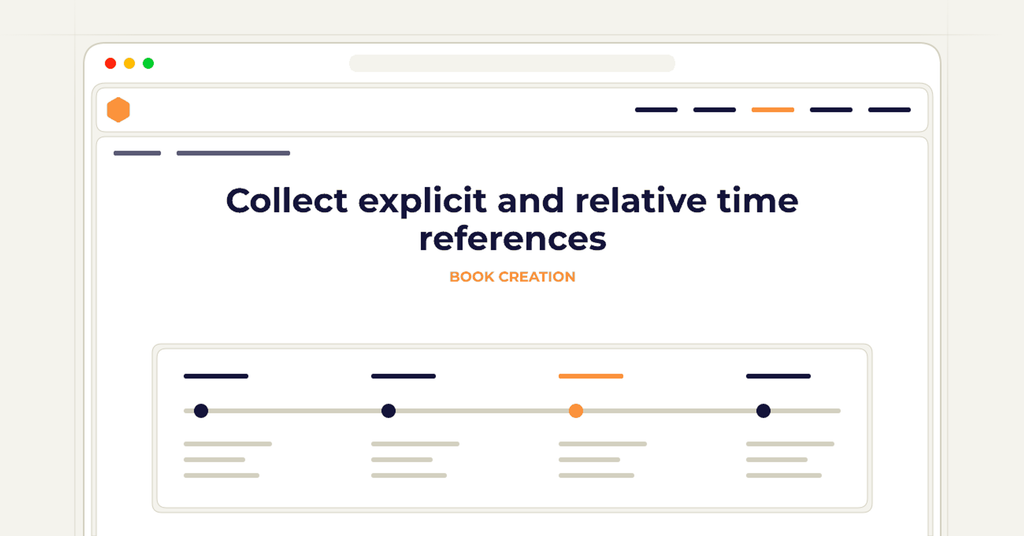
Search for dates, named days, times of day, and phrases that describe elapsed time. Include wording such as the next morning, three weeks earlier, or since the previous winter. These references can create constraints even when the story never gives a complete calendar date. Record enough context to understand what event each phrase refers to.
Do not rely only on searching for numbers. A sentence saying a character has not visited since graduation can carry a timeline assumption, as can a reference to an anniversary. Review the story's important relationships and backstory for these indirect markers. They may matter more to continuity than a decorative date mentioned once in a letter.
Check transitions between connected events
Compare each important transition with the time the manuscript says has passed. Ask whether the sequence remains internally consistent with travel, preparation, and actions described elsewhere. Keep the review focused on the story's established facts rather than inventing unnecessary precision for every moment. A novel can leave time approximate when that ambiguity is intentional and does not undermine the narrative.
If a chapter says a meeting happens the following day, verify which day the previous scene establishes. Later revisions can move or replace a scene while leaving relative wording unchanged. The phrase may still read smoothly even though it now points to the wrong interval. Correct the relationship at its source instead of adding a new date that creates further contradictions.
Track what each character knows at each point
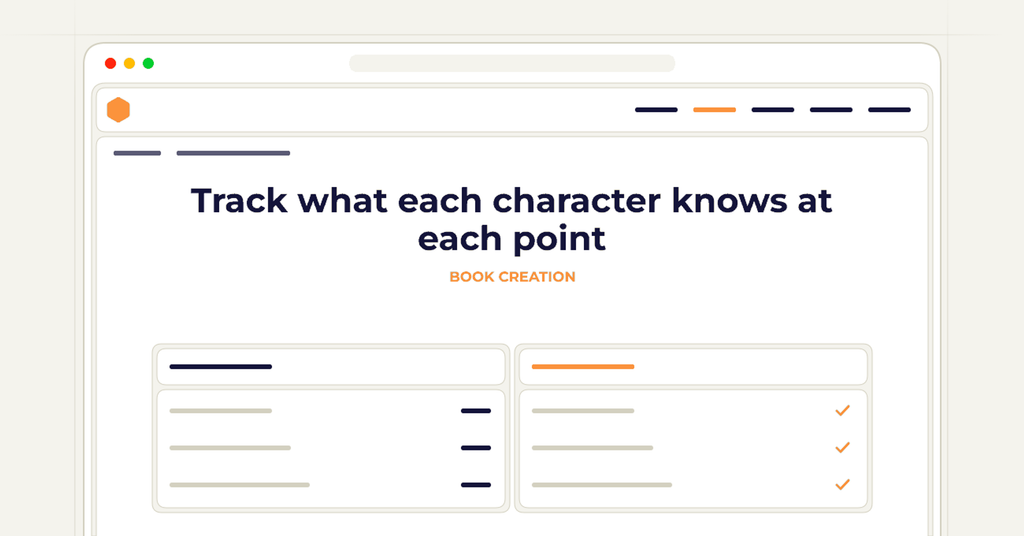
Chronology affects knowledge as well as physical events. Record when a character learns an important fact and compare later references with that point. A scene moved earlier in the manuscript may retain dialogue that assumes information revealed afterward. The error can remain hidden if the editor checks only calendar dates and overlooks the causal sequence.
Distinguish the character's knowledge from the reader's knowledge. A reader may know something from another viewpoint that the current character has not learned. Preserve that difference when revising. The timeline review should support the story's intended suspense and dramatic irony rather than making every character speak from the author's complete understanding of events.
Preserve intentional uncertainty and unreliable accounts
Some stories contain conflicting recollections or deliberately uncertain dates. Mark those choices in the editorial record so they are not automatically normalized. Identify whose account supplies each version and what the reader is meant to understand about the disagreement. An intentional ambiguity still benefits from a clear author-level decision about its function.
If the contradiction is accidental, revise the affected scenes and references together. If it is deliberate, check that the manuscript provides the intended context without overexplaining the device. Automated consistency suggestions can help locate candidates for review, but the author must decide whether a mismatch is an error, a viewpoint limitation, or part of the story's design.
Reconcile the final manuscript and supporting copy
After corrections, reread the affected scene sequence and search for related references elsewhere. Check chapter headings, dated documents, summaries, and any timeline illustration included in the book. A revised event date can leave an old reference in a caption or introductory note even when the main scenes are consistent.
Keep the accepted timeline with the final manuscript version and preserve relevant content-origin records for generated additions under current KDP guidance. The timeline is an editorial reference, not a replacement for reading the story. Use it to make revisions traceable while confirming that the final narrative still feels clear and intentional in the order readers encounter it.
Frequently asked questions
Clear answers for this publishing decision.
Must a nonlinear story be rearranged into chronological order?
No. Track event order separately from presentation order. This makes continuity review possible while preserving flashbacks, delayed revelations, and other intentional structures.
Which time references are easy to miss?
Relative phrases, anniversaries, memories, and statements about how long a relationship or absence has lasted can create constraints without giving an explicit date.
Should every conflicting date be corrected automatically?
No. Determine whether it is accidental or belongs to an unreliable account or deliberate ambiguity. Record the decision and review the reader’s intended understanding.
How do I get from an idea and a brief to an editable manuscript I can finish?
Write the brief first, generate a structure you can edit, then draft and revise the manuscript in reviewable sections so one change never overwrites work you already approved.
Start a book project from a brief