
Introduction: The New Assembly Line Of Indie Publishing
Three years ago, few independent authors pictured their publishing pipeline looking more like a software factory than a lonely writer at a desk. Today, spreadsheets, dashboards, and artificial intelligence tools sit alongside notebooks and coffee mugs on the typical KDP author’s desk. The question is no longer whether AI will touch self publishing, but how to use it responsibly, profitably, and in line with Amazon’s rules.
For authors who care about long term careers, the goal is not to replace themselves with a robot. It is to build an intentional, accountable ai publishing workflow that makes routine tasks faster, amplifies good decisions, and leaves room for the work only a human can do: judgment, taste, ethics, and voice.
This article maps that workflow from idea to royalties, highlights the new risks and opportunities, and explains how professional KDP authors are quietly rebuilding their businesses around AI without losing control of their catalogs.
What An AI Publishing Workflow Really Looks Like
In practice, a modern AI assisted publishing system is a chain of tightly defined steps. Each step has an input, a decision, and an output that moves downstream. The most successful authors treat this like an assembly line that serves their creative vision, not the other way around.
On one end of the spectrum is a single ai writing tool open in a browser, spitting out draft chapters. On the other is an integrated environment that some software vendors are marketing as an ai kdp studio, where research, drafting, cover concepts, metadata, and ads are coordinated inside one dashboard.
Most professional workflows fall somewhere in between. The common pattern looks like this:
- Market and reader research to decide what to write
- Outlining and drafting with AI assistance, followed by human revision
- Professional level editing and proofreading, human or hybrid
- Cover design, interior layout, and files prepared for upload
- Metadata, pricing, and advertising setup with data support
- Continuous monitoring of sales and profitability, plus catalog level decisions
AI can touch almost every box on this diagram, but it does not remove the need for the author to stand at the center as editor in chief.

According to Amazon’s own KDP Help resources, authors remain fully responsible for what they publish, even if software generates part of it. That requirement shapes how serious authors design their systems.
Planning Stage: Research, Positioning, And Compliance
Every efficient pipeline starts with choosing the right project. AI can vastly speed up research, but it cannot decide your business model or ethics. At this stage, your priorities are demand, differentiation, and kdp compliance.
Most high earning KDP authors now rely on some combination of browser extensions, cloud tools, and custom spreadsheets when they evaluate new ideas. A well built niche research tool can digest search volumes, category competition, and historical rank data in ways that were impossible for a solo author ten years ago.
Once you have a concept, tools that position themselves as a kdp categories finder and engines for structured kdp keywords research help translate that concept into the language readers actually type into the search bar. Used well, they guide your positioning without locking you into clones of what already exists.
Dr. Caroline Bennett, Publishing Strategist: The biggest mistake I see is not that authors use AI, but that they outsource judgment to it. Let AI surface opportunities, then decide as a publisher whether those opportunities fit your brand, your ethics, and your long term positioning on Amazon.
At the same time, you must filter ideas through Amazon’s content policies. Since 2023, KDP has required disclosure for AI generated and AI assisted texts. The official guidelines also restrict spammy or low value repetition, excessive public domain compilations without added value, and misleading metadata. Any planning system that ignores these rules is building on sand.
Designing Metadata And Reader Targeting
Once you decide to greenlight a project, attention shifts to how it will appear in the Kindle Store. Here, structured information matters as much as prose.
A dedicated book metadata generator can help you unify subtitles, series names, back cover copy, and backend keywords so they tell a consistent story to both readers and algorithms. Instead of writing each field from scratch, you can define a central positioning statement and let the tool propose variations that you refine.
Authors who maintain their own websites or catalogs also think about internal linking for seo at this stage. Blog articles, reading order pages, and sample chapters can all point to the same product page, reinforcing relevance for specific themes or tropes while giving readers a clear path to purchase.
Planning is also the right time to sketch an advertising angle. If you intend to use a sophisticated kdp ads strategy, your working title, keywords, and category placement should all be compatible with ad targeting so you avoid expensive mismatches later.
Writing And Editing With AI Without Losing Your Voice
Drafting is where many authors first encounter the power and risks of AI. A strong ai writing tool can break through blank page syndrome, summarize research, and propose outlines tailored to a genre. What it cannot do is understand your lived experience, your reputation with readers, or what you are willing to put your name on.
Some platforms now advertise themselves as a kind of kdp book generator that promises near instant manuscripts. Experienced authors almost universally advise against pushing those promises to the limit. The time savings disappear quickly if your book fails Amazon’s quality checks or attracts negative reviews from betrayed readers.
James Thornton, Amazon KDP Consultant: The most profitable authors I work with use AI like a sharp assistant, not a ghostwriter. They feed it tight prompts, reject a lot of what it returns, and spend real time revising so the final book still sounds like them. That discipline is what protects a catalog.
Practically, a responsible AI assisted drafting process looks like this:
- Use AI to help generate and compare multiple outlines, then choose one and commit
- Draft sections in your own words, using the tool for suggestions or expansions when you stall
- Ask AI to highlight structural weaknesses or continuity errors, then verify each suggestion manually
- Run a plagiarism check and sensitivity review as needed, especially if AI touched factual or cultural material
- Engage human beta readers or a professional editor before locking your final draft
According to Amazon, you must accurately label content as AI generated or AI assisted when you upload. Keeping a transparent log of how you used software during drafting makes that disclosure trivial instead of stressful.
Design And Production: Covers, Layout, And File Prep
Once the text stabilizes, the workflow shifts to visuals and layout. Here, AI is not a replacement for professional taste, but it can significantly cut the time and cost of experimentation.
On the cover side, authors increasingly start with an ai book cover maker to generate concept art that matches genre expectations. These tools can output dozens of variations around your brief, which you then refine with a designer or an advanced graphics program. The human task is to ensure legibility at thumbnail size and alignment with reader expectations for your category.
Inside the book, a disciplined approach to kdp manuscript formatting prevents many of the technical rejections that used to plague first time authors. Templates or AI informed wizards within serious self-publishing software can standardize chapter headings, page breaks, fonts, and scene dividers.

Two areas where machines excel are repetitive layout tweaks and format conversions. Intelligent tools can suggest optimal ebook layout patterns for different genres, or recommend an appropriate paperback trim size based on your page count, printing cost, and cover art composition.
Still, there is no substitute for manually testing your files on real devices and in print proofs. Automatic conversions sometimes introduce subtle spacing, hyphenation, or image issues that only show up in context.
Sample Production Workflow You Can Adapt
To see how these pieces fit together, consider a typical production workflow for a series launch:
- Finalize edited manuscript in a clean Word or Google Docs file
- Import text into layout software that includes AI assisted style checking
- Apply a series specific template for headings, drop caps, and ornamental breaks
- Export to EPUB and print ready PDF, then validate both with KDP’s previewers
- Use AI generated cover concepts to brief your designer, then apply final art to KDP’s cover calculator specifications
- Create a private listing and order a proof copy before wide launch
The key is consistency. Once you have a pipeline that reliably produces clean files, resist the temptation to rebuild it every time a new tool offers a flashy feature.
Listing, A+ Content, And SEO At Scale
The public face of your workflow lives on Amazon’s product pages. Here, smart use of AI can dramatically improve visibility without crossing into manipulation. The two pillars are persuasive copy and healthy kdp seo.
Many authors now run their blurbs, headlines, and bullet points through a kdp listing optimizer that evaluates length, keyword coverage, and clarity. Used well, these tools nudge you toward tighter copy and more consistent messages across your catalog.
Below the fold, rich media modules open a second front for differentiation. Strong a+ content design combines branded banners, comparison charts, and lifestyle images to answer questions that the basic description cannot. AI can help generate headline variants, image text, and even mock layout options, but human oversight is essential to keep the tone aligned with your brand.
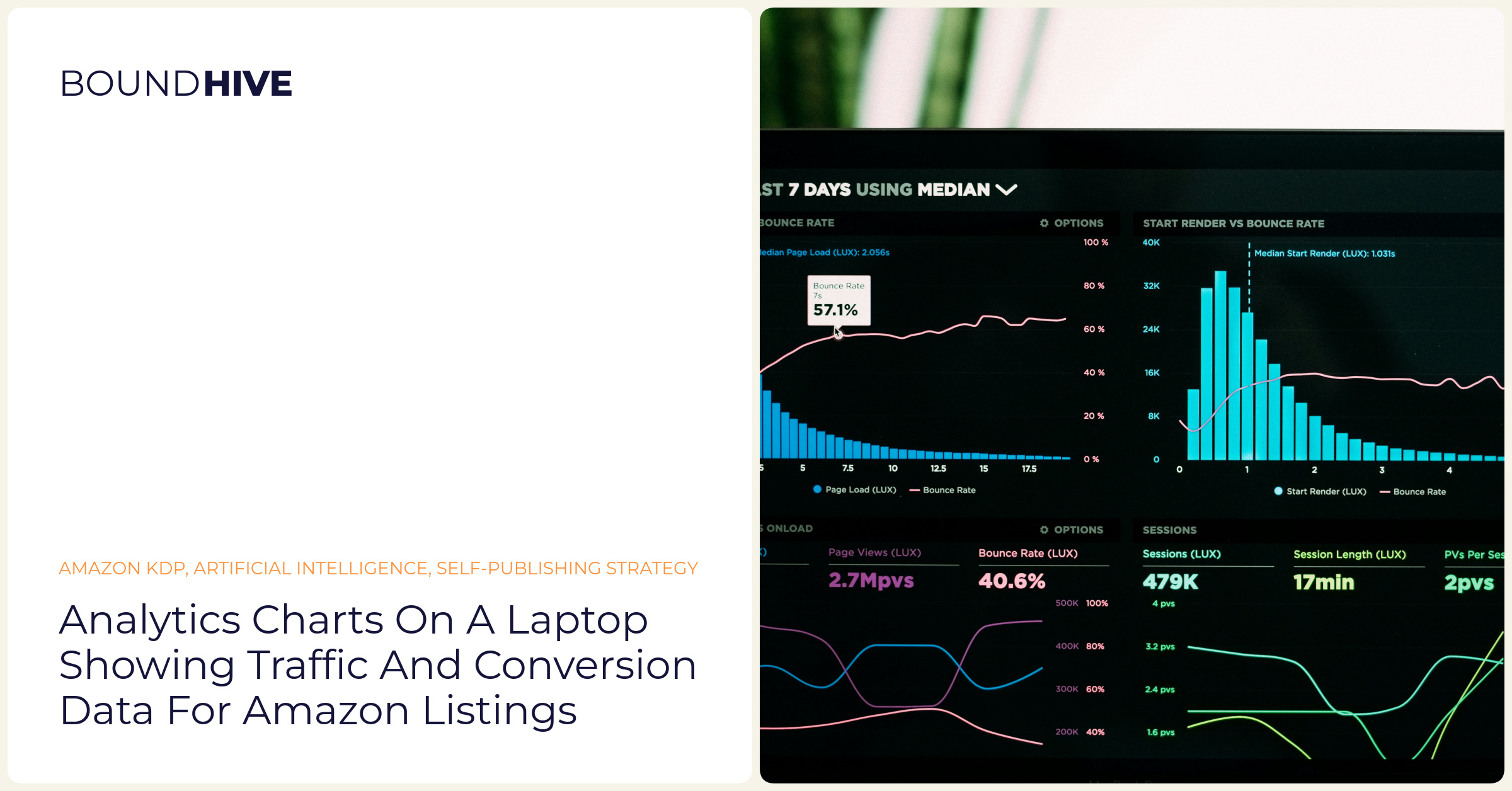
To understand how AI changes the workload, it helps to compare manual and assisted approaches.
| Task | Manual approach | AI assisted approach |
|---|---|---|
| Sales description | Write from scratch, revise based on intuition and limited feedback | Draft multiple options with AI, test language that mirrors reader reviews and search terms |
| Backend keywords | Guess based on gut feel and what competitors seem to use | Leverage keyword datasets, search suggestions, and AI clustering to cover themes more systematically |
| A+ modules | Design each image and banner separately with a designer | Generate copy and layout variations quickly, then refine the best performing versions |
Outside Amazon, your author site or publisher site can further support discovery. Descriptive pages for each title, organized by series and genre, should clearly present pricing and features in ways that search engines understand. Some publishers adopt a schema product saas style of structured data so that books and subscription offerings are machine readable in search results, even when they are managed through software platforms.
All of these assets feed into discoverability. Over time, your listings become not just static product pages but evolving experiments informed by data and reader behavior.
Advertising, Analytics, And Revenue Forecasting
For many serious authors, AI’s biggest commercial impact arrives not in drafting or design, but in how they measure and scale results. Advertising and catalog management are where small improvements compound into large gains.
A well structured kdp ads strategy uses a blend of automated bidding, manual keyword curation, and deep analysis of search term reports. AI can help cluster winner and loser terms, propose negative keywords, and simulate how different budget levels might shift impressions and clicks.
Revenue forecasting is another area ripe for augmentation. Instead of manually cross checking downloads, page reads, and ad spend, serious authors often rely on a royalties calculator that estimates profit per title under multiple pricing and print options. When that calculator integrates marketing data, it becomes possible to ask not just, “What did I earn last month?” but, “What is the likely lifetime value of this series if I double ad spend for three weeks?”
Laura Mitchell, Self Publishing Coach: The authors who sleep best at night know their numbers. AI will not make your business magically profitable, but it makes it much easier to model scenarios and spot unprofitable books before they drag a catalog down.
These analytics feed directly back into planning. Underperforming books can be refreshed with new covers, revised blurbs, or updated keywords. Breakout titles can justify spin offs or omnibus editions. A mature AI informed workflow treats each launch as a test in an ongoing experiment, not a one shot event.
Choosing The Right Self Publishing Software Stack
None of this works smoothly without stable tools. The market for self-publishing software has exploded, and the pricing models can be as complex as the software itself. Indie authors often find themselves comparing one no-free tier saas platform that charges from day one with another that offers a generous free level, then layers on a named plus plan and a premium doubleplus plan for heavier users.
Rather than chasing every shiny feature, map your core needs:
- Research and keyword analysis
- Drafting and editing support
- Design and formatting
- Metadata and listing optimization
- Advertising analytics and catalog reporting
Then compare how each candidate covers those areas at the price points that matter for your catalog size. A simple comparison table like the one below can clarify tradeoffs.
| Capability | Entry tier | Plus style tier | Power user tier |
|---|---|---|---|
| Keyword and niche research | Basic search volume and competition indicators | Deeper competitor tracking and saved projects | Team sharing, historical trend analysis, and API access |
| Manuscript and layout tools | Standard templates and exports | AI assisted style analysis and error detection | Advanced automation, series level template management |
| Ads and analytics | Simple reporting dashboards | Cross marketplace aggregation and alerts | Scenario modeling and predictive revenue forecasts |
Whichever stack you choose, retain ownership of your data. Export your keywords, campaigns, and metadata regularly. That habit prevents vendor lock in and makes it easier to adapt as the market evolves.
On this site, for example, our own AI powered tool focuses on helping authors quickly generate structured book assets that they can then refine, rather than attempting to automate the entire creative process. Used alongside other research and layout tools, it slots into the workflow as a time saver, not a replacement for your judgment.
Ethics, Compliance, And The Future Of Amazon KDP AI
The last component of a sustainable AI workflow is trust. Readers care about authenticity, and Amazon cares about protecting its marketplace from abuse.
Recent policy updates around amazon kdp ai usage make two expectations clear. First, authors must be transparent with Amazon about how AI contributed to their content. Second, low value, repetitive, or misleading content runs a higher risk of removal or account action, regardless of how it was created.
Marisa Chen, Digital Publishing Analyst: Amazon is not anti AI. It is anti spam and anti confusion. If you use AI to enhance quality, improve descriptions, or make your research more scientific, you are aligned with where the platform is going. If you use it purely to flood the store with interchangeable titles, you are betting your career on a fragile loophole.
Practical steps to stay within both the letter and spirit of the rules include:
- Keeping auditable notes of where AI intervened in your process
- Using plagiarism checks and human editorial review before publishing
- Prioritizing reader value over volume when planning schedules
- Responding promptly to reader feedback about accuracy or quality
AI can supercharge both good and bad strategies. The deliberate choice is to use it in ways that protect your reputation and your relationship with the platform that hosts your catalog.
Bringing It All Together
At its best, a mature AI informed workflow feels less like a gadget collection and more like a quiet infrastructure that supports your publishing decisions. A thoughtful combination of a niche research tool, drafting assistants, design aids, and analytics dashboards lets you behave like a mid size publisher even if you are just one person and a laptop.
Behind the scenes, your tools might resemble an interconnected studio that some vendors market as an ai kdp studio. On the surface, what readers see are better aligned books: on target categories, professional covers, clean interiors, compelling descriptions, and pricing that makes sense for the value delivered.
For authors willing to learn the systems and respect the rules, AI is not a threat to creativity. It is a set of levers that make each good decision more powerful and each experiment less risky. Combined with clear eyes about kdp compliance and a commitment to craft, those levers can support careers measured in decades, not just viral months.
As new tools arrive, the most important step is still the first: design the workflow you want, then let technology serve it, not define it.