
The quiet revolution behind successful KDP catalogs
On the surface, the Amazon book marketplace still looks familiar: rankings rise and fall, new releases flood key categories, and breakout hits appear to come from nowhere. Behind the scenes, however, a quieter shift is underway as serious self publishing authors rethink how they build and run their businesses with artificial intelligence at the center of the workflow.
What began as experimentation with a single ai writing tool or a quick cover mockup has evolved into a full ai publishing workflow that touches every stage of production, from concept validation to marketing analytics. For many, the decision is not about whether to use AI, but about how to introduce automation without sacrificing quality, voice, and long term reader trust.

At the same time, Amazon is refining its own stance on automation. Since late 2023, the Kindle Direct Publishing Help Center has added guidance on AI generated content, asking authors to disclose when text, images, or translations are produced with automated tools. That evolving framework shapes every decision about which tools belong in a modern KDP stack and which habits put a catalog at risk.
From solo operator to systems thinker
For much of the last decade, the indie success story followed a familiar pattern: a lone writer, a handful of titles in a profitable niche, a lean backlist supported by word of mouth and a few targeted ads. The authors who are thriving in 2024 tend to look different. They still care deeply about craft, but they also think like operations managers, mapping their catalog as a repeatable process instead of a series of one off projects.
Dr. Caroline Bennett, Publishing Strategist: The authors who pull away from the pack are the ones who treat their KDP catalog like a product line, not a lottery ticket. AI does not replace their judgment. It gives them a dashboard and a set of levers they can pull with much greater precision.
This shift does not mean abandoning creativity for automation. It means deciding in advance which steps in the pipeline deserve direct human attention and which can safely rely on templates, prompts, or external tools. In practice, that often begins with mapping the full journey for a single book before scaling across a catalog.
What an AI publishing workflow really looks like
A mature AI assisted operation usually follows a predictable sequence. It may vary by genre, but the structure is surprisingly consistent from nonfiction playbooks to fast paced genre fiction.
- Market and audience discovery using a combination of sales data, category analysis, and a focused niche research tool.
- Concept and outline development that blends author expertise with structured prompting inside an ai kdp studio or similar workspace.
- Drafting, revision, and sensitivity checks with an ai writing tool used as a sparring partner, not a ghostwriter.
- Cover, interior, and ebook layout production, often with dedicated design tools and pre tested templates.
- Metadata, positioning, and ad setup, supported by keyword and category analysis, a book metadata generator, and a well defined kdp ads strategy.
- Post launch optimization, including reviews analysis, price testing, and catalog level planning for sequels or spin offs.
Some authors still execute most of these steps manually. Others rely on a growing ecosystem of self-publishing software that integrates directly with their research, drafting, and analytics tools. The common thread is intentionality: every automation choice is linked to a specific bottleneck or growth opportunity, not to novelty for its own sake.

On this site, for example, the integrated ai kdp studio is designed to support that full pipeline rather than offering a single isolated feature. Authors can move from idea briefs to outlines to production ready copy inside one environment, then export assets for layout and upload. Used responsibly, that kind of consolidated space can cut weeks from a release schedule.
The core stack: tools that matter now
Not every tool marketed to self publishers deserves a permanent place in your workflow. The core stack that most authors rely on falls into three clusters: content creation, design and production, and discoverability. Each cluster now includes credible AI assisted options, but the decision to adopt them should rest on clear performance benchmarks rather than hype.
Drafting and development
The most visible changes have occurred at the drafting stage. Early experiments with generic chatbots produced uneven results, especially in fiction, where nuance and pacing matter. Newer tools fine tuned for publishing behave more like structured collaborators. A focused kdp book generator can help an author turn a validated idea into a chapter by chapter outline, sample scenes, and back cover copy, all within a framework that respects genre conventions.
Inside a mature ai publishing workflow, the writer typically defines guardrails: narrative voice, target audience, and must include elements are locked in before any automated drafting begins. The ai writing tool then handles exploratory work, alternative phrasing, and structural suggestions while the author retains control over every final paragraph. Some creators also link their drafting tool to a custom book metadata generator so that positioning and reader promises stay consistent from the first outline to the product page.
James Thornton, Amazon KDP Consultant: When I review client catalogs, I can usually tell within a few pages whether AI replaced the author or supported them. The strongest titles use automation to sharpen structure and clarity while keeping a very human point of view at the center.
For authors who prefer to focus on strategy and editing rather than raw drafting, the AI environment available on this site allows them to generate structured long form content, then iterate through focused revision passes. That balance helps keep voice and authority intact while speeding up the path from outline to upload.
Design, layout, and production
Visual presentation has become equally competitive. Readers who browse dozens of thumbnails in a single session often decide within seconds which titles deserve a closer look. Modern cover tools and layout systems give indie authors access to production values that once required an agency budget. A specialized ai book cover maker can generate multiple on brand directions aligned with current market trends, which a designer or author then refines into a final concept.
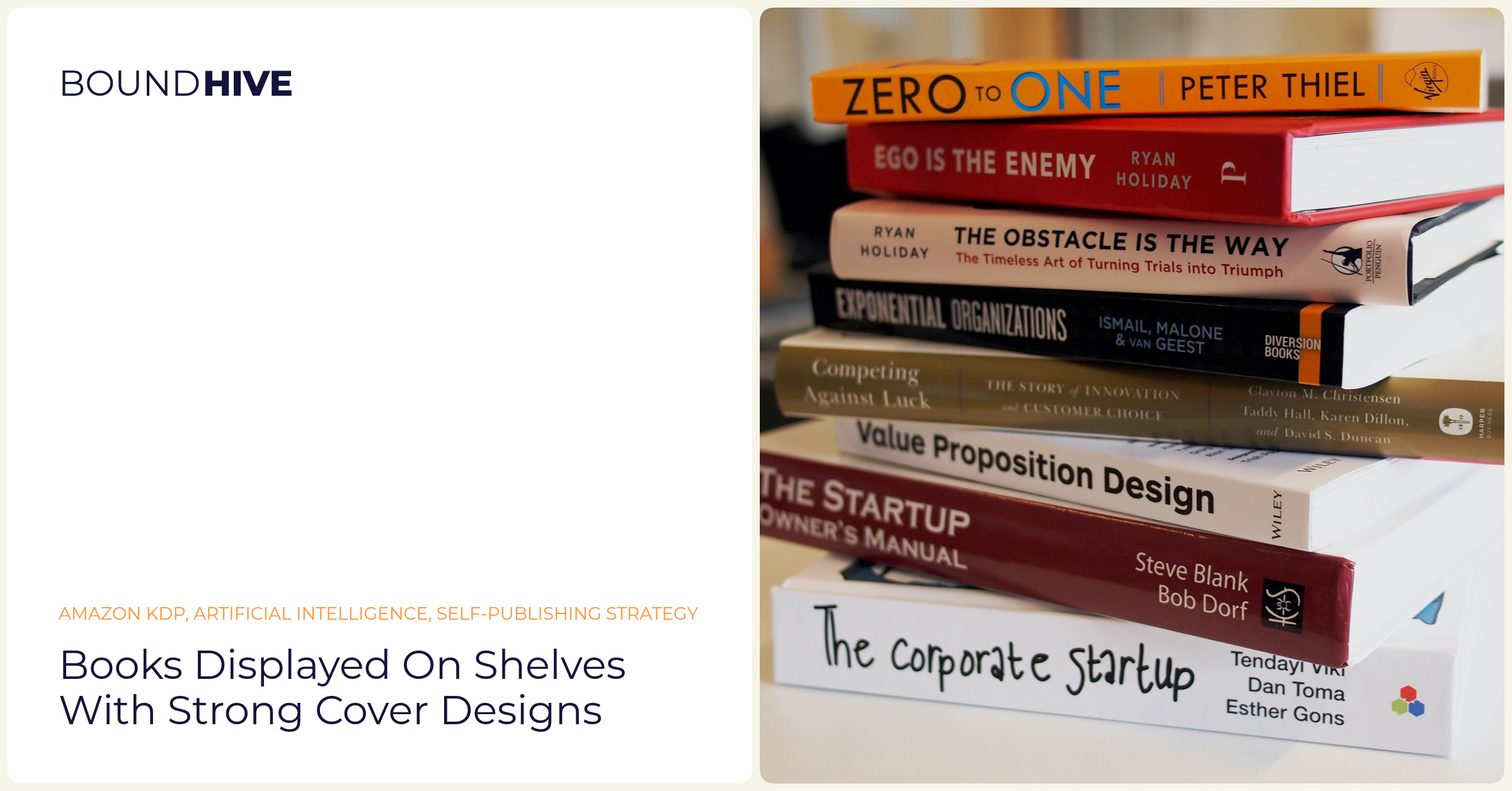
Interior quality matters just as much. Automated workflows for kdp manuscript formatting make it far easier to produce consistent, professional interiors across digital and print. Tools that export clean EPUB files support a smooth ebook layout, while preset profiles for paperback trim size ensure that print files meet KDP's specifications without costly trial and error. These systems are not just about aesthetics. They reduce the risk of rejection, rework, and reader complaints tied to poor readability on different devices.
As Amazon continues to expand print options, including hardcovers in more markets, that production discipline becomes more important. Authors who standardize their interior templates across a series can launch additional formats quickly, freeing time for marketing and catalog planning.
Metadata, SEO, and discoverability
Once the book looks sharp, it enters the most unforgiving part of the process: discoverability. On a marketplace that ingests thousands of new titles every day, metadata decisions determine whether a book reaches its intended readers. Here, specialized tools and clear processes make a measurable difference.
Structured kdp keywords research helps authors identify the search phrases that real readers use, rather than guesses pulled from intuition alone. A dedicated kdp categories finder compares category competition and ranking thresholds, reducing the temptation to select inaccurate or misleading classifications just to chase a best seller tag. Once those decisions are made, a kdp listing optimizer can test variations of titles, subtitles, and descriptions to improve click through and conversion.
The same mindset applies to visual merchandising. Effective a+ content design gives authors additional space beneath the product description to showcase brand elements, comparison charts, and series level messaging. Used well, those modules answer questions that might otherwise lead to hesitation, refunds, or negative reviews.
All of this forms the practical side of kdp seo. While Amazon does not disclose its full ranking algorithm, consistent patterns have emerged. Clean, accurate metadata that matches reader intent tends to outperform scattershot keyword stuffing. For authors running their own sites alongside their KDP presence, smart internal linking for seo points traffic from related blog posts and resources to their most important series pages, supporting external discovery as well.
| Stage | Manual approach | AI assisted approach |
|---|---|---|
| Keyword and category selection | Brainstorm phrases, scan store pages, guess at demand | Use kdp keywords research data and a kdp categories finder to map demand and competition |
| Product page copy | Write and revise descriptions from scratch for each title | Feed outline and audience data into a book metadata generator and refine outputs |
| Optimization over time | Manually test occasional changes, track results in spreadsheets | Use a kdp listing optimizer tied to sales and traffic data for continuous improvement |
The strongest results come from authors who treat these tools as instruments, not answers. They still read competing listings, talk to readers, and study their subcategories. Automation takes over the heavy lifting of data collection and scenario testing, making it easier to run disciplined experiments without losing weeks to manual research.
Laura Mitchell, Self-Publishing Coach: Metadata is not a one time setup. The authors who win on KDP check their categories and search rankings regularly, then adjust based on real reader behavior. AI tools make that process faster, but you still need a human strategy.
Many of those authors keep a living document for each title that records target keywords, category decisions, and major listing changes over time. That audit trail is invaluable when a book suddenly surges or stalls, because it lets the team connect performance shifts to specific changes rather than relying on guesswork.
Marketing and monetization in an AI assisted world
Once a book is positioned correctly, the focus shifts from being found to being chosen and remembered. This is where marketing strategy and revenue planning intersect. AI can play a role in both, but the underlying economics of royalties, advertising costs, and reader lifetime value still govern the outcome.
Advertising and audience targeting
Within Amazon's own ecosystem, Sponsored Products and Sponsored Brands remain the primary levers for exposure. A thoughtful kdp ads strategy usually starts with low risk automatic campaigns to discover converting search terms, then graduates to tightly themed manual campaigns around the best performers. AI driven tools can analyze search term reports at scale, flagging profitable phrases and wasteful clicks far faster than a human poring over CSV files.
Outside Amazon, audience discovery begins earlier. A robust niche research tool can identify reader communities across platforms, from subreddits to BookTok clusters, where a particular topic or trope is gaining momentum. Authors then tailor their messaging and creative assets to those pockets of demand instead of chasing broad, unfocused audiences. Some pair this research with automated copy testing, using AI to generate multiple ad variations that speak to different emotional angles before committing significant budget.
What has not changed is the importance of long term thinking. Ads should support a broader strategy that includes email list growth, series development, and reader retention, not simply spike sales for a single launch week.
Pricing models, royalties, and SaaS choices
As the tool landscape matures, many authors face a new challenge: managing software subscriptions as carefully as they manage ad spend. A realistic plan starts with the numbers. A simple royalties calculator tied to KDP's current payout tables helps predict per unit earnings across formats and territories. That forecast is the baseline for deciding how much recurring expense your catalog can responsibly support.
Many publishing platforms and self-publishing software suites now operate as a no-free tier saas, which means there is no permanent free option and only time limited trials. Instead of defaulting to every available tool, experienced authors map their stack to tiered needs: an entry level set of essentials, a mid range package, and a full scale build for larger catalogs.
Those tiers are often framed as a plus plan for solo authors who publish a few titles per year and a doubleplus plan for teams managing extensive series, co author agreements, or multiple pen names. On the backend, providers increasingly use a structured schema product saas approach for their own sites, making it easier for search engines to understand what each plan includes. For authors, the practical question is simpler: does a given tool pay for itself through time saved, higher conversion, or expanded reach within a reasonable timeframe.
Victor Alvarez, Publishing Technology Analyst: I advise clients to treat software the same way they treat ad spend. Start small, measure impact rigorously, and expand only when the data justifies it. The goal is not to collect tools. The goal is to build a lean, effective system that matches your publishing stage.
Some authors review their entire tech stack every six or twelve months, canceling underused subscriptions and consolidating features where possible. Others deliberately keep one slot open for experiments so they can test emerging tools without bloating their recurring costs.
Compliance, risk, and Amazon's AI rules
The rise of automation has also drawn more attention from platforms and regulators. For KDP authors, the most important framework is Amazon's own guidance on AI usage. Under its current policies, often referred to informally as the amazon kdp ai rules, authors must disclose whether they are publishing AI generated content, particularly when large portions of text or imagery come from automated systems rather than human creators.
Staying on top of kdp compliance means more than ticking a checkbox during upload. It requires honest internal tracking of your process. If an AI system drafts entire chapters that you lightly edit, that should be treated differently from a tool that suggests alternate phrasings or catches typos. Similarly, if your cover image or interior illustrations originate from a generative model, that needs to align with both KDP's current expectations and any licensing terms for the model itself.
Alicia Reynolds, Publishing Attorney: The legal and platform risk does not come from using AI. It comes from using AI without a paper trail. Authors should document which tools they use, where key assets come from, and how much they modify automated outputs before publication.
Authors can reduce risk by keeping a simple compliance log: a document or spreadsheet that lists tools used on each project, the nature of their contribution, and links to the relevant sections of the KDP Help Center. That record can be invaluable if Amazon ever requests clarification about a title or if an external rights holder raises a concern.
None of this means that AI is inherently unsafe. It means that professional publishers, including solo indies, treat their workflows with the same rigor that traditional houses apply to permissions and contracts.
A sample AI assisted KDP launch blueprint
For authors trying to translate these principles into practice, it helps to walk through a concrete example. Imagine a nonfiction author developing a series on small business finance. They want to release three tightly connected titles over eighteen months while maintaining quality and compliance. A disciplined AI supported plan might look like this.
- Use market data and a niche research tool to validate demand for specific subtopics, such as cash flow management or tax planning for freelancers.
- Capture audience insights, constraints, and tone guidelines inside an ai kdp studio workspace, then generate detailed outlines for the first book.
- Draft chapters with an ai writing tool assisting on structure and clarity, while the author injects case studies, anecdotes, and expert commentary from their own practice.
- Prepare clean manuscripts with kdp manuscript formatting tools, producing both EPUB files for ebook layout and print ready PDFs tuned to the desired paperback trim size.
- Develop cover options in an ai book cover maker, test thumbnails with existing readers or a small ad spend, and then finalize designs with human oversight.
- Run structured kdp keywords research and feed the results into a book metadata generator. Use a kdp categories finder to choose accurate but competitive categories, then refine copy with a kdp listing optimizer.
- Create brand consistent a+ content design modules that highlight the series roadmap and link each new release to the broader ecosystem.
- Estimate revenue potential with a royalties calculator and set budgets for software and ads accordingly, choosing between a vendor's plus plan and doubleplus plan options based on projected volume.
- Launch initial kdp ads strategy campaigns, then rely on analytics, including external schema product saas dashboards where available, to refine targeting and creative over the first ninety days.
- Maintain a compliance log that records how each AI system contributed to the project, ensuring that the book meets current expectations for amazon kdp ai transparency and kdp compliance.
Crucially, this blueprint treats AI as part of a larger system rather than a magic switch. The author still engages deeply with readers, refines their positioning between releases, and thinks several books ahead. Over time, the workflow becomes a repeatable asset in its own right, supporting faster experimentation, smarter risk taking, and a more resilient catalog.
For creators willing to invest in that level of discipline, the payoff can be substantial. AI accelerates production and insight, but it is the human strategy behind those tools that turns a collection of titles into a durable publishing business.